How to Find the Right Lemon Vibrator for Your Body and Preferences
Not every clitoral vibrator works for every body. Here's how to cut through the noise and find the lemon vibrator that actually matches your sensation style, intensity needs, and pleasure baseline.
You bought a vibrator because it looked good online or a friend swore by it. Then you used it and thought: this doesn't feel like anything. Or worse, it felt like way too much. The product wasn't broken. Your body and that particular toy just weren't a match. And that's the part the industry glosses over.
Finding the right lemon vibrator isn't about settling for what's popular. It's about understanding what your body actually responds to, which patterns feel intuitive to you, and what intensity level sits between boring and overwhelming. Let's dig into how to figure that out.
There are roughly three sensation styles that matter when you're looking at lemon clitoral vibrators: rumble, buzz, and pulse.
Rumble vibrators move side to side with a deeper, lower-frequency motion. They feel broader and less agitated. If you like deep pressure and slow buildup, this is your lane. People often describe rumble as "full" or "satisfying." It's harder to numb out to rumble because it engages more tissue.
Buzz vibrators oscillate back and forth rapidly with a higher frequency. They're more localized and intense. Buzz is great if you like quick sensation, direct stimulation, or if you're someone who needs variety and novelty to stay engaged. The downside: if your sensitivity is high or your tissues are thin, buzz can feel sharp or even uncomfortable after a few minutes.
Pulse patterns are rhythmic interruptions in vibration. They're neither rumble nor continuous buzz. Some people find pulse meditative and easy to sync with their own body's rhythm. Others find them distracting. Pulse works best when you already know you like pattern-based stimulation.
Here's the thing: you might not know which one your body prefers until you try it. But you can make an educated guess. If you like deep tissue massage, rumble will probably feel better. If you like the feeling of fingertips moving quickly, buzz might be your speed. If you like rhythm and predictability, start with a pulse option.
Let's say a lemon vibrator has settings 1 through 10. Setting 1 isn't weak. It's just where the vibration starts. For some bodies, setting 2 is the sweet spot. For others, you need to dial up to setting 5 or 6 before sensation registers at all.
This usually comes down to tissue sensitivity, nerve density, and what your body has been conditioned to expect. Someone who's been using vibrators for years might need a stronger intensity baseline. Someone exploring for the first time, or after a long break, might find anything past setting 3 overwhelming.
The mistake people make: buying a vibrator because it has the most settings. More settings is good if you actually use the range. But if you're someone who thrives in the 3-5 range, a toy with 20 settings becomes annoying. You're scrolling past useless intensities instead of staying in the zone.
When you're comparing lemon vibrators, look for toys that have a thoughtful intensity curve, not just a lot of numbers. A vibrator with 6 carefully spaced intensities is better than one with 15 bunched together.
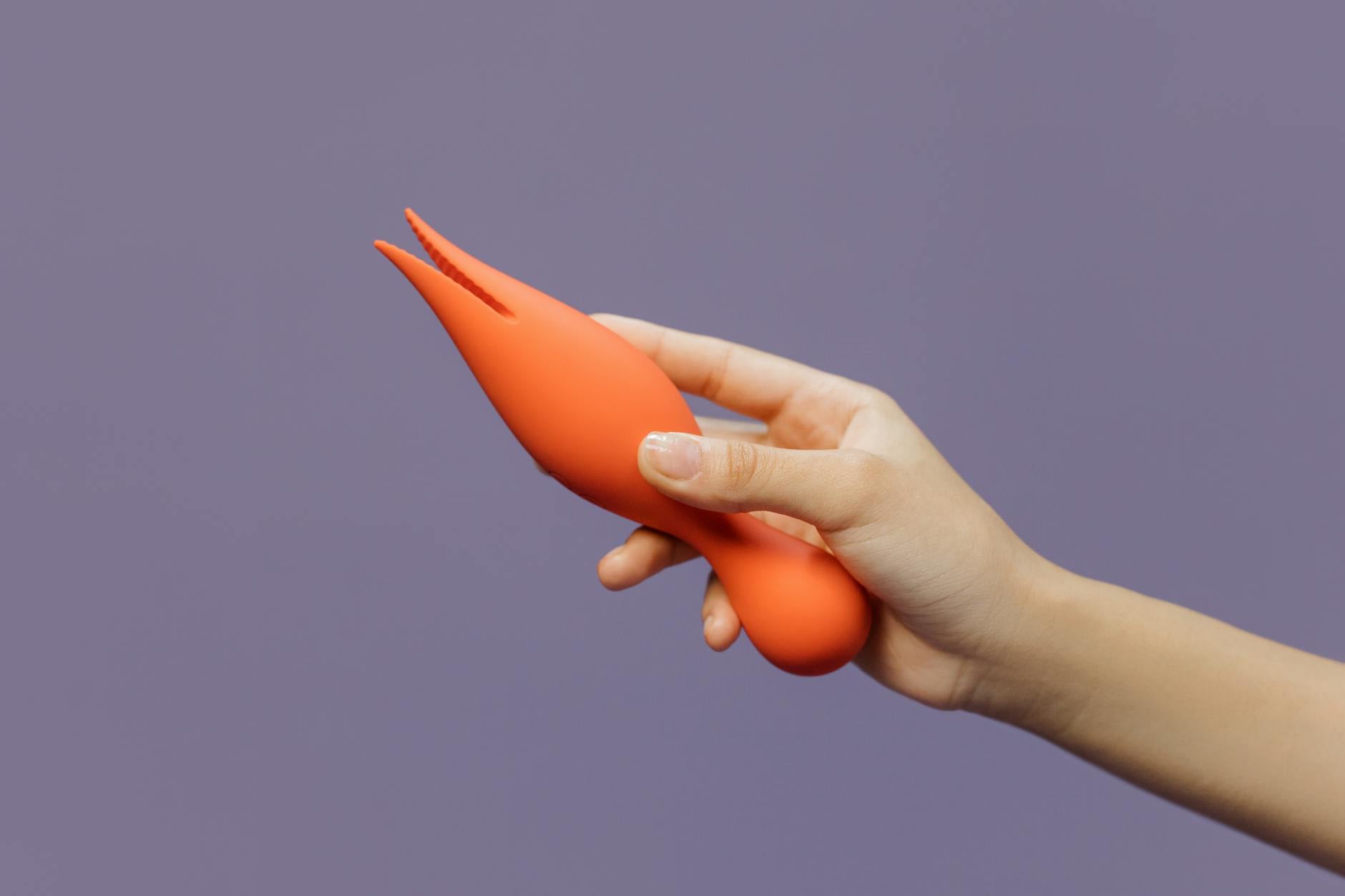
Not all clitoral vibrators have the same contact area. Some have a flat, broad head. Others are more pointed or have a small circular opening. The shape changes how the vibration hits your body.
Flat or rounded heads distribute pressure over a wider area. This is good if your clitoris is sensitive to point pressure, or if you like exploring the whole vulva, not just the clitoral glans. Broad contact feels less intense even at the same vibration setting.
Pointed or smaller openings concentrate vibration on a smaller area. This is intense and precise. It's great if you know exactly where you like to be touched and you want direct, no-nonsense sensation. The trade-off: it can feel overwhelming if you're new to vibrators or if your tissues are irritable.
Suction-style heads (like the Lemon Massagers clitoral vibrators) create a seal and pull gently while vibrating. This feels fundamentally different from direct pressure. Suction engages nerves without friction. Many people find it less likely to cause numbness over time because it's not relying on speed or direct impact. If you've been numb to other vibrators, suction is worth trying.
The shape also affects how you angle the vibrator. A broad head gives you wiggle room. A narrow one requires more precision. If you like hands-free play or if you're working with limited mobility, shape matters for practicality, not just pleasure.
Lemon vibrators and similar adult toys are usually made from silicone, which is non-porous, hypoallergenic, and easy to clean. Silicone also feels smooth and warm to the touch, which matters more than it sounds. A cold toy right out of the drawer feels like rejection. A silicone toy that's room temperature or warmed in your hands feels like an extension of your own body.
Some people are sensitive to certain material coatings. If you have reactive skin or you've had irritation with other toys, pay attention to material composition. Hypoallergenic medical-grade silicone is worth the extra cost if you're sensitive.
Also: texture. Most lemon clitoral vibrators are smooth, which is the standard for a reason. But if you like texture during manual stimulation, you might think you want a textured vibrator. Usually you don't. Vibration on texture can feel scratchy. Smooth is your friend.
Smaller vibrators are portable, easier to control, and good for traveling or solo play where you don't need hands-free stability. They're also easier to use at lower intensities without feeling like a power tool.
Larger vibrators have bigger motors and often deliver deeper rumble. They can be held or inserted in different ways. The bigger footprint means more surface area contact, which some people find comforting.
But size isn't about "better." A small, well-engineered lemon clitoral vibrator will outperform a larger, poorly designed one every time. Think about your actual use. Will you want to hold this yourself, or do you want hands-free? Are you sharing a drawer with a partner, or do you have dedicated space? Do you travel with it? These logistics matter.
Some lemon vibrators are nearly silent. Others sound like a dental drill. If you live with other people or you're noise-conscious, this changes everything. A vibrator you can't use because you're embarrassed about the sound is useless.
Runtime matters too. A toy that dies after 15 minutes is frustrating. Aim for at least 45 minutes to an hour of continuous use on a single charge. Rechargeable vibrators are better than battery-powered ones because you're not constantly buying replacements, and the motors tend to be more consistent.
Battery type also affects feel. Some lemon vibrators use larger motors that deliver steadier, deeper vibration. Others use smaller motors that ramp up quickly but might plateau. Neither is "wrong", but steadiness versus quick ramp-up changes the experience.
Start with what you already know about your body. Do you prefer deep pressure or light touch? Fast rhythm or slow buildup? Do you like variety or repetition? Have you used vibrators before? If yes, what worked and what didn't?
Next, read reviews with a skeptical eye. Someone saying "this changed my life" is useful data, but it doesn't tell you if it will work for your body. Look for reviews from people who describe what they like about the product, not just the outcome. "I love the rumble" is more helpful than "amazing."
If you're uncertain, start with a mid-range option that has good reviews across different sensation styles. The Lemon Massagers line is specifically designed around clitoral stimulation with suction technology, which is a smart entry point if you've struggled with numbness or if you're new to vibrators. You're not betting your entire budget on one bet.
Try it for at least three sessions before deciding it's not right. Your body needs time to adjust, especially if you're new to vibrators or if you're coming back after a long break.
If the vibrator is too intense, don't assume you need to turn it down. Sometimes intensity setting 1 is still too strong because the toy itself is just a higher-frequency model. In that case, you might need to choose a different toy.
If the vibrator is doing nothing, give it a few tries in different contexts. You might be in your head, or you might need more time. But if you've used it five times and you feel nothing, it's probably not your toy.
If it's uncomfortable or irritating, stop. There's no prize for pushing through discomfort. Either the toy isn't right for your anatomy, or the material doesn't agree with your skin. Move on. The goal is pleasure, not persistence.
Most people end up with more than one vibrator, not because they're obsessed, but because different situations call for different tools. A small, discreet lemon clitoral vibrator might be your travel companion. A larger, rumblier option might be what you reach for with a partner. One you love for solo play might not work during partnered sex.
You don't need to build a collection all at once. Start with one that matches your best guess about your body, use it, learn from it, and then branch out. Each toy teaches you something about what you like.
The right lemon vibrator is the one that makes you feel good without making you think too hard. It matches your sensation style, sits in your intensity range, and feels intuitive to use. Finding it takes a little research and honesty about what your body actually needs. Everything else is just noise.
Too intense usually feels sharp, numb, or irritating rather than pleasurable. If you're at setting 1 and it still feels overwhelming, that vibrator's baseline intensity is just too high for your body right now. You might come back to it later, but there's no reason to force it. A vibrator should feel like an enhancement, not an assault. Try a different model with lower frequency or broader head shape.
No. Vibrator-induced numbness is temporary and reversible. It happens when you overuse high-frequency buzz on sensitive tissue, which can temporarily fatigue the nerves. The fix is simple: take a break for a few days, and when you use your vibrator again, keep sessions shorter or use lower intensity. Rumble-based vibrators, or toys with suction technology, are less likely to cause temporary numbness because they engage tissue differently than pure buzz.
Clitoral vibrators (like lemon vibrators) are designed for external clitoral stimulation with a compact head and pinpoint intensity. Wand vibrators are larger, with a broad, rounded head, and deliver vibration over a wider area. Wands are great for full-vulva exploration and partner play. Clitoral vibrators are better if you like focused, direct sensation. Neither is better. It depends on what you're looking for.
Yes, if you want to. Lube isn't required, but it can enhance sensation by reducing friction and allowing the vibrator to glide smoothly. Water-based lube is compatible with silicone vibrators (silicone lube can degrade silicone toys over time). Lube also makes the experience feel more intuitive and less mechanical.
Anywhere from five minutes to never, depending on your body, your arousal level, and whether you've had orgasms before. Don't put a timer on it. Some people come quickly. Others need 20 minutes or more. Some people need a combination of mental focus and physical stimulation. If you're not climaxing in your first few tries, that's normal. Keep using it without the goal of orgasm, and often the pleasure comes more easily once the pressure is off.
Both. Many lemon clitoral vibrators work beautifully during partnered sex because they focus on external stimulation while you or your partner penetrates or does other things. Some are small enough to use during penetration without getting in the way. Read about specific design if partner play is part of your plan, but most modern clitoral vibrators are versatile.
Choosing the right lemon vibrator comes down to understanding your body's language. What does it want to feel? How fast, how deep, how focused? Once you answer those questions honestly, the toy that fits becomes obvious. And everything after that is just practice and pleasure.