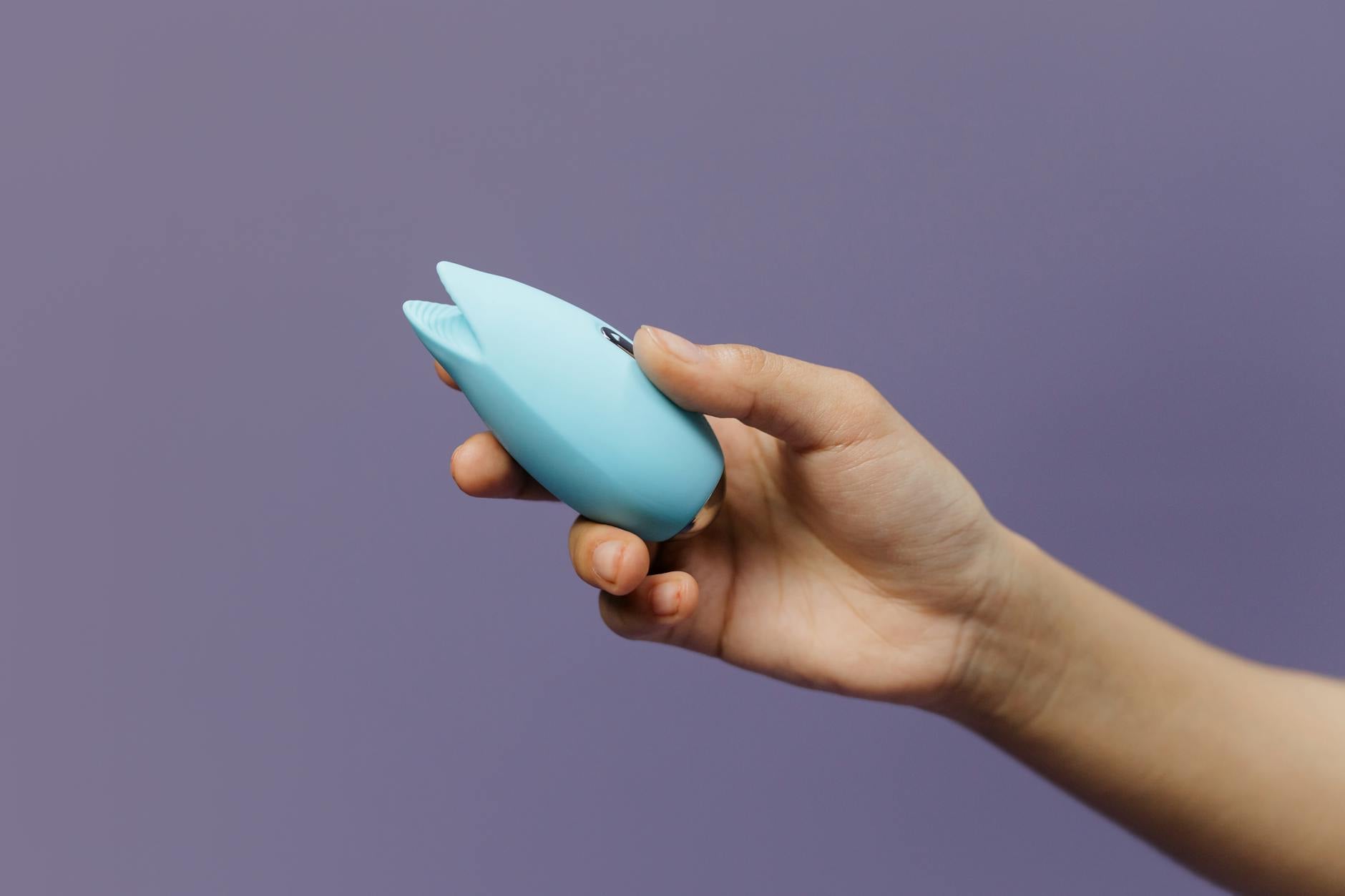
Here's what nobody tells you about using toys together
Instead of pulling you apart, a clitoral vibrator can actually pull you closer. I know that sounds counterintuitive. Most people assume that the moment a toy enters the picture, something human gets replaced. What actually happens is different: the toy removes friction (literally and figuratively), and suddenly you have space to be more present with each other.
The catch? You have to be intentional about it. A vibrator isn't a thing you do to someone while staring at the ceiling. It's something you do together, which means rhythm, communication, and a willingness to try positions and angles you might not have tried before.
Let me walk you through what works.
Start with curiosity instead of performance pressure
The first barrier most couples hit isn't physical. It's psychological. You're worried they'll think you need it. They're worried they're not "enough." Neither of you wants to be the one who brings it up because that feels like criticism.
Here's what actually works: approach it as exploration, not replacement. "I read that couples who experiment together stay more connected" is different than "I need this because you're not satisfying me." One opens a door. The other closes one.
Start outside the bedroom. Show them the lemon vibrators you're curious about. Let them hold it. Ask what patterns they'd want to try. Make it collaborative before it's intimate. This does two things: it kills the shame around the toy itself, and it plants the idea that you're doing this together, not separately.
Position matters more than you think
Here's where most couples stumble. They try the toy in the exact same positions they've always used, which means the toy feels disconnected from the partner. You're lying side by side, they're touching you with the vibrator, and you're both staring up at the ceiling.
Instead, try these angles:
Face them while you're on top. You control the depth and angle of whatever penetration you want, and they can see your face and hold the lemon clitoral vibrator exactly where it feels best. There's eye contact. There's touch. The vibrator becomes part of the experience, not a replacement for it.
Spoon position with the vibrator between you. Their chest is against your back, one arm around you, the other hand holding the lem vibrator. You can reach back to touch them. You can see them in a mirror if you have one nearby. The whole thing feels contained and close.
Sitting up, face to face, with them using the toy while you're inside them or while they're inside you (depending on anatomy and preference). This is intimate in a way that feels almost counterintuitive with a toy involved. You're inches apart. You can kiss. You can watch each other's faces.
Touch is the actual connection point
Here's what I tell couples who are nervous about this: the vibrator isn't what creates connection. Touch is. The toy is just a tool that frees up their hands to be on your body in other ways.
While they're using a clitoral vibrator on you, they can:
Run their other hand down your chest or back. Kiss your neck or mouth. Hold your face. Look at you. Whisper to you. Ask if the pattern feels good. Adjust based on what they see and hear.
Most people freeze up when a toy appears, like they've suddenly lost a job. They haven't. They've been reassigned. Instead of being responsible for your entire orgasm, they're now part of orchestrating it with you. That's actually more intimate if you approach it that way.
Communication is the scaffolding
Longer-term couples often have silent sex down to a choreography. You both know what happens next. The problem is that silent choreography breaks the second you introduce a variable like a lemon sexual toy. Suddenly nothing is automatic, and that's good.
Talk while it's happening. "That feels amazing." "More pressure." "Try a different pattern." "I want you inside me now." These words do something that silence can't do. They remind you that there's a person there. They create a real conversation instead of just a transaction.
If you're someone who gets self-conscious talking during sex, this is a skill worth building anyway. It's not less sexy. It's more honest. And couples who can name what they want tend to have better sex overall.
The solo-to-couple transition
A lot of people have used lemon vibrators alone for years before their partner ever sees one. Which means you know exactly how you like it and what patterns work best. Your partner doesn't know any of this yet.
So show them. Use it on yourself in front of them. Not as a performance, but as information. "This pattern feels best." "Here's where I like the pressure." "This intensity is too much." You're teaching them, and they're learning you at the same time. That's the opposite of disconnection.

Photo by cottonbro studio on Pexels
Timing and pacing are underrated
Here's a mistake I see over and over: someone reaches for the vibrator too early. You're just getting warmed up, and suddenly there's intensity. Your body hasn't had time to prepare, so it feels jarring instead of good.
Try this instead. Spend 10.15 minutes on foreplay without the toy. Kissing, touching, building anticipation. Let your body get where it needs to be naturally. Then introduce the clitoral vibrator. It'll feel like an amplification instead of a shock.
Also pay attention to pacing during. You don't need to go straight to the highest pattern. Start low. Let it build. Talk about when you want to go higher. The rushing is usually what creates the "I'm being serviced" feeling. The slowing down is what keeps it intimate.
Dealing with the weird feelings
Some people get anxious the first time. You're worried it doesn't feel right to your partner. You're worried they're judging you. You're worried you look or sound different. You're worried you'll stop being attracted to them.
That's all normal, and here's the thing: the best antidote is doing it again. The first time any new thing happens in the bedroom, it's weird. The second time, it's less weird. The third time, you're both relaxed enough to actually enjoy it.
If either of you feels genuinely uncomfortable, that's worth a conversation outside the bedroom, not during. But a little awkwardness on the first go? That's just learning together. That's actually bonding.
You might discover something new about your body
A clitoral vibrator can help you experience different kinds of sensation than you have before. Stronger orgasms. Different patterns of release. Sensations that are harder to achieve without a toy. Some people find that this deepens their pleasure in partnered sex, even when a toy isn't involved, because they now know more about what their body is capable of.
That's information worth sharing. "Now that I know what this feels like, I want to explore it with you" is a conversation that brings couples closer. It means you're willing to be vulnerable about your pleasure, and that willingness is what actually sustains long-term intimacy.
If you're finding pleasure again when sensations feel unpredictable, using lemon sexual toys with a partner can actually accelerate that process because you have someone there giving you feedback and adjusting in real time.
The aftermath is part of it too
A lot of couples treat the toy as something that appears, does its job, and then disappears. What actually matters is what happens right after. You're still there with each other. Stay there. Hold each other. Talk. Don't immediately roll over and go to sleep or start checking your phone.
The intimacy isn't the orgasm. The intimacy is the presence. The toy was just a vehicle for getting there together.
FAQ: Using clitoral vibrators with your partner
What if my partner feels replaced by the vibrator?
The tool isn't your competitor. It's a collaborator. The difference between "I bought this because you're not satisfying me" and "I bought this so we can explore new things together" is everything. If they already feel replaced, a conversation about what that means will help more than the toy ever could.
Can we use a lem vibrator during penetration?
Absolutely. Lots of couples do. Many people find that clitoral stimulation during penetration changes the sensation completely. If you're using a compact lemon clitoral vibrator, the partner can hold it while you're inside each other, or you can hold it yourself. Just communicate about what feels good.
How do I bring this up without making it weird?
Don't make it a big conversation. Show them something you read. Show them the toy in a catalog. Ask if they're curious. Keep it casual. The more you act like it's normal (because it is), the less weird it becomes.
What if I want to use the vibrator and they don't touch me at all?
That's fine for solo use, but if you're trying to maintain connection during partnered sex, having them involved is the whole point. Even if they're just holding it while you're close to each other, that's still participation. Talk about what they'd be comfortable with.
Does using a toy change how we connect long-term?
It can deepen connection if you both approach it with openness and curiosity. It can create distance if one person feels resentful or pressured. The toy itself doesn't determine the outcome. Your willingness to stay present with each other does.
We tried it once and it felt awkward. Should we try again?
Yes. Almost everything new feels awkward the first time. The second or third time, your bodies relax, your brain stops narrating the experience, and it actually becomes enjoyable. Give it a real chance before deciding it's not for you.
Introducing a clitoral vibrator isn't about adding more stimulation to your relationship. It's about adding more intentionality. You're showing up for each other differently, which means you're paying attention differently. That's where real connection lives.
If you want to explore this in more depth, I'm here. Reach out anytime.
Sources and references
Gottman Institute. (2023). The science of lasting relationships: Communication patterns in couples who maintain intimacy. Research brief. Retrieved from gottman.com
Meston, C. M., & Frohlich, P. F. (2000). The neurobiology of sexual function. Archives of General Psychiatry, 57(11), 1012-1030.
Miller, S. A. (2016). Couples and sex toys: Attitudes, usage, and relational outcomes. Journal of Sex & Marital Therapy, 42(8), 664-677.