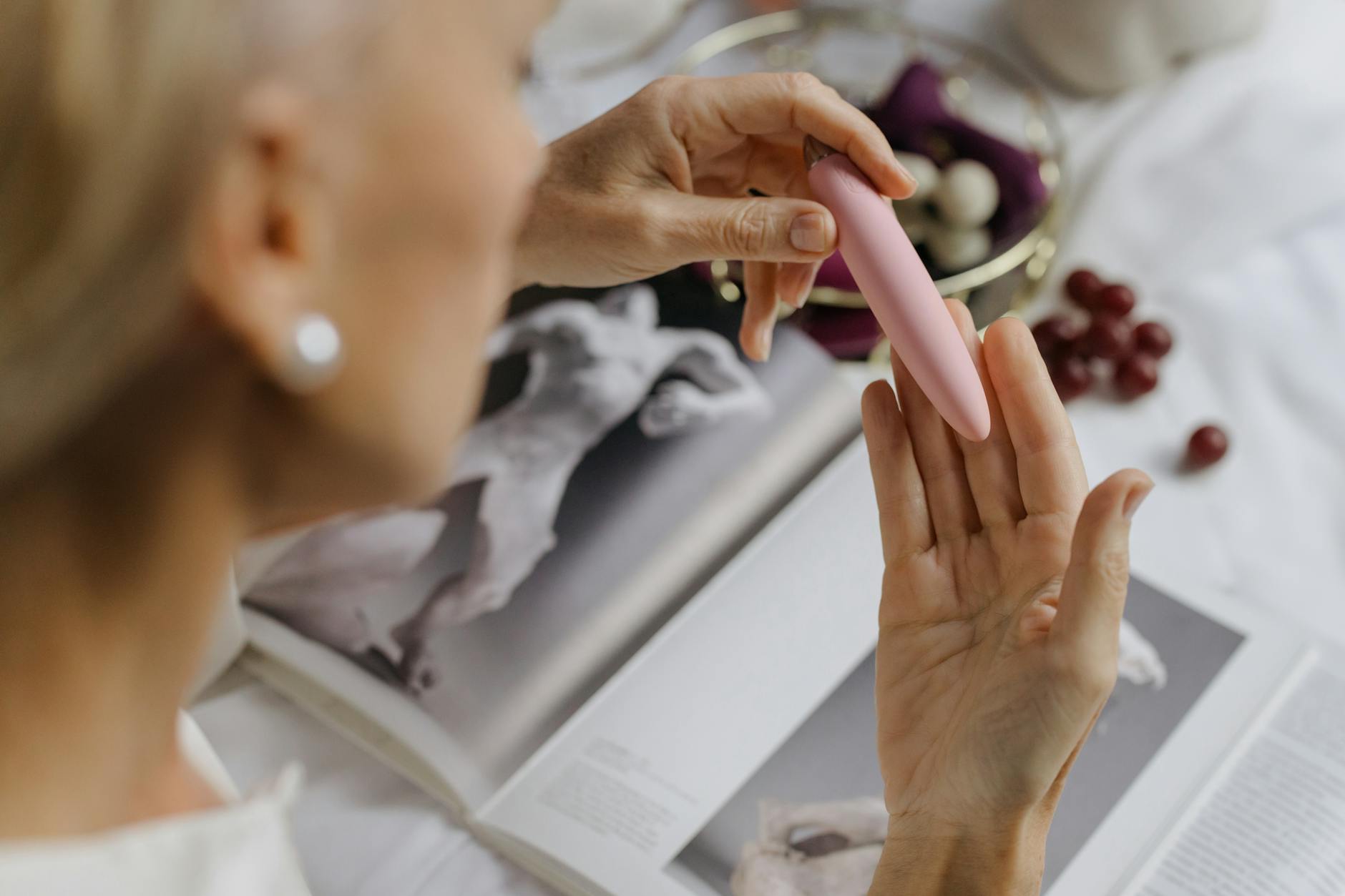
Let's talk about what actually changes
Honestly? Arousal doesn't stop after 40. It just takes longer to wake up. That's not poetic language. That's neuroscience. Blood flow to the pelvic region takes longer to engage. Vaginal lubrication arrives later. The muscles take more time to relax. And if you're expecting the 15-minute arousal arc you might have had at 25, you're going to feel like something's wrong.
Nothing is wrong. Your body is just asking for more runway.
Here's the thing nobody tells you: once arousal does build, it often goes deeper and lasts longer. The intensity peak might be a 45-minute climb instead of a 10-minute sprint. And many people report that the orgasms that arrive at the end of that climb feel wildly different. Better, often. Longer. More full-body.
But you have to stop fighting the slow burn first.
Why arousal gets slower and what that means
Three physiological reasons:
Hormonal shifts. Estrogen and testosterone both decline gradually over your 40s and beyond. Estrogen affects vaginal blood flow and lubrication. Testosterone drives desire itself. Both changes are normal and survivable, especially if you understand them.
Circulation. The vascular system becomes slightly less responsive to arousal cues. It's not dramatic, but it means the surge that used to be automatic now requires a bit more stimulus.
Pelvic floor changes. The muscles lose tone without effort. This isn't weakness. It's that maintaining strength requires intentional work now, where it used to be automatic.
None of this means you can't have incredible orgasms. It means you need to budget more time and choose tools that work with these changes instead of against them.
Why lemon clitoral vibrators work better for slower arousal
Here's the strategic part. The clitoris has about 8,000 nerve endings. After 40, those nerves don't go anywhere. They're still there. But the tissue around them changes texture and sensitivity. A vibrator with too much intensity can feel overwhelming or numb-making. Vibrators with the right approach are a game-changer.
Lemon Massagers' clitoral vibrators use a suction and pulsing pattern that stimulates without relying on the intensity you'd need from friction alone. This matters because.
One, suction-based stimulation wakes up the nerves faster than vibration alone in many bodies. Two, it distributes sensation across a wider area, which means you don't need aggressive power to feel pleasure. Three, the pattern-switching lets you explore what works on that particular day, because arousal thresholds shift with your cycle, stress level, sleep, and yes, age.
The exact timing strategy for slow arousal
Let's be practical. If arousal used to peak in 10-15 minutes and now it takes 30-40, that's not a problem if you expect it and plan for it.
Before you touch yourself. Spend 5-10 minutes on something that builds mental arousal. That might be reading, watching something, texting your partner, fantasizing. The brain is still your most powerful sex organ. Feed it first.
First 10-15 minutes. Manual touch, partner touch, or low-intensity vibration. The Lemon Clitoral Vibrator on pattern 1 or 2 works here. Your job is to wake up the nerves and start blood flow moving. Don't jump to high intensity expecting instant results.
Minutes 15-30. Ramp it up slowly. Move to pattern 3 or 4. Add rhythm. Pay attention to what feels good in this moment, not what felt good last week. Arousal is not consistent day to day after 40. It's mercurial. Some days you need more time. Some days the right pressure hits faster than expected. Stay curious instead of frustrated.
After minute 30. If you're building toward orgasm, you have options. Stay with the vibrator pattern that's working. Add a partner. Combine movement and vibration. Let arousal crest at its own pace rather than chasing a timer.
The research backs this up. Studies on arousal in people over 40 consistently show that paced, patient stimulation produces stronger and more satisfying orgasms than high-intensity urgency. You're not losing capacity. You're shifting strategy.
The solo versus partnered difference (and why it matters)
When you're alone, you control the entire timeline. You can spend 10 minutes on mental arousal, 20 on physical. You can stop and start. You can use whatever tool works without negotiating.
With a partner, communication becomes crucial because they won't automatically know that arousal now takes longer. If your partner expects sex to follow the same 15-minute rhythm from years ago, the mismatch feels like rejection on both sides. You feel rushed. They feel like something's wrong with them.
Here's what I recommend: have a conversation outside the bedroom. Not during sex, not in a vulnerable moment. Just say it straight: "Arousal takes me longer now. That's not because I'm not interested. That's just how my body works. I actually enjoy this more because there's more time to build. When we have sex, I need about 30-40 minutes total." Then decide together whether you want to extend your sessions, or whether vibrator play solo becomes a regular thing, or whether you find a middle ground.
Using a lemon clitoral vibrator can actually speed this conversation up because there's a concrete tool involved. Instead of "I need more time," it becomes "Let's use this together and find what works." Tools reduce the emotional weight of logistics.
Managing expectations about orgasm quality after 40
Here's the plot twist most people don't expect: orgasms often get better after 40. Not weaker. Better.
Why? A few reasons. First, you know your body better. Second, the pressure to perform or please diminishes. Third, the orgasm itself often involves more of your body. It's less concentrated in one spot and more of a wave that moves through you. Fourth, you've likely had enough experience to know what you like and to ask for it.
But this only happens if you're working with your body's timeline instead of fighting it. That's where tools like lemon sexual toys come in. A vibrator takes the friction work off your partner or your hand. It lets you focus on sensation instead of mechanical effort. It gives you access to patterns and rhythms you can't create manually. That freedom often translates directly into better orgasms.
When to see a doctor and when to keep going
If arousal takes 30-40 minutes and you still get to orgasm, you're fine. Keep doing what you're doing.
If arousal takes more than an hour and doesn't resolve, or if there's pain, then it's time to talk to a gynecologist. Genitourinary syndrome of menopause (GSM) is real, and so are hormonal changes that deserve assessment. But most people in their 40s and 50s don't have a medical problem. They just have a timing problem.
Also, if desire itself has completely flatlined for months and arousal can't even begin, that's different from arousal taking longer. Low desire has other roots. Stress, relationship issues, depression, medications. A doctor can help sort that out.
But the slower arousal arc by itself? That's just aging. It's manageable. It's often actually better on the other side.
What slow arousal teaches you about pleasure
Here's the thing I've learned from working with couples through this transition. Slow arousal isn't a bug in the system. It's a feature.
When arousal was fast and urgent, it was easy to confuse momentum with real desire. Easy to power through discomfort. Easy to settle for "good enough."
When arousal is slower, you have to get honest about what you actually want. You have to stay present instead of reaching for a destination. You have to let pleasure build instead of sprinting to the finish line.
That slowness, when you stop resisting it, often produces the deepest intimacy people have had in years. Not because the sex is different. Because the presence is different.
The lemon clitoral vibrators and other toys from Lemon Massagers work well for this reason. They're not trying to override your body's signals. They're trying to work with what's actually happening. They give you a tool that matches the pace your body wants now, not the pace it wanted before.
Take the time your body is asking for. Use the tools that honor that timeline. Invite your partner into the slower arc or enjoy it solo. Either way, arousal after 40 isn't the ending. It's often a beginning.
FAQ: Arousal, age, and clitoral vibrators
How much longer does arousal usually take after 40?
There's real variation here, but research suggests most people see a shift from 10-15 minute arousal arcs to 25-40 minutes. Some jump straight to 45-50. Others don't notice much change. It depends on overall health, stress, hormones, and relationship dynamics. The point isn't hitting a specific timeline. It's knowing it won't follow your 25-year-old pattern and planning accordingly.
Does using a vibrator train my body to need it for arousal?
This is a common worry and largely unfounded. Your clitoris doesn't "get used to" vibration the way a muscle atrophies from disuse. What happens is you learn what feels good and seek it out. That's not dependency. That's preference. And honestly, if vibration works better for you at 42 than it did at 25, lean into it. Your pleasure matters.
Can I speed up arousal if I'm impatient?
You can try, but you'll likely frustrate yourself. Here's what works: mental arousal first (fantasies, reading, foreplay), then physical. The more you build the mental component, the faster the physical response follows. So if 40 minutes feels too long, spend the first 15 on things that genuinely turn you on mentally. That often cuts the total time without the pushback of fighting your body.
Should I talk to my partner about my arousal taking longer?
Absolutely. The alternative is them noticing, wondering if something's wrong with them, and spiraling into their own worries. A 30-second conversation outside the bedroom prevents weeks of misunderstanding. "My arousal takes longer now. It's normal. I actually enjoy it more because it's deeper." That's all you need to say.
Is there a difference between arousal taking longer and having low desire?
Yes, huge difference. Low desire means you don't want sex at all or you rarely think about it. Slow arousal means you want sex but your body takes longer to get there once you start. Slow arousal is a pace change. Low desire is an interest change. They need different approaches, so don't confuse them.
Can hormonal changes be fixed so arousal gets faster again?
Hormone therapy might help if hormone levels are genuinely low and causing problems. But not all slower arousal is a hormone problem. Age, stress, relationship dynamics, and body changes all play roles. Before jumping to hormones, work with what you have and see if tools and timing shifts help. Many people find they don't need medical intervention once they stop fighting the slower pace.
Keep exploring
If you're navigating slower arousal and wondering whether it's about tools, timing, or something deeper, reach out. Understanding how arousal actually shifts can change everything. It's not loss. It's just a different map of your body at this stage of life.