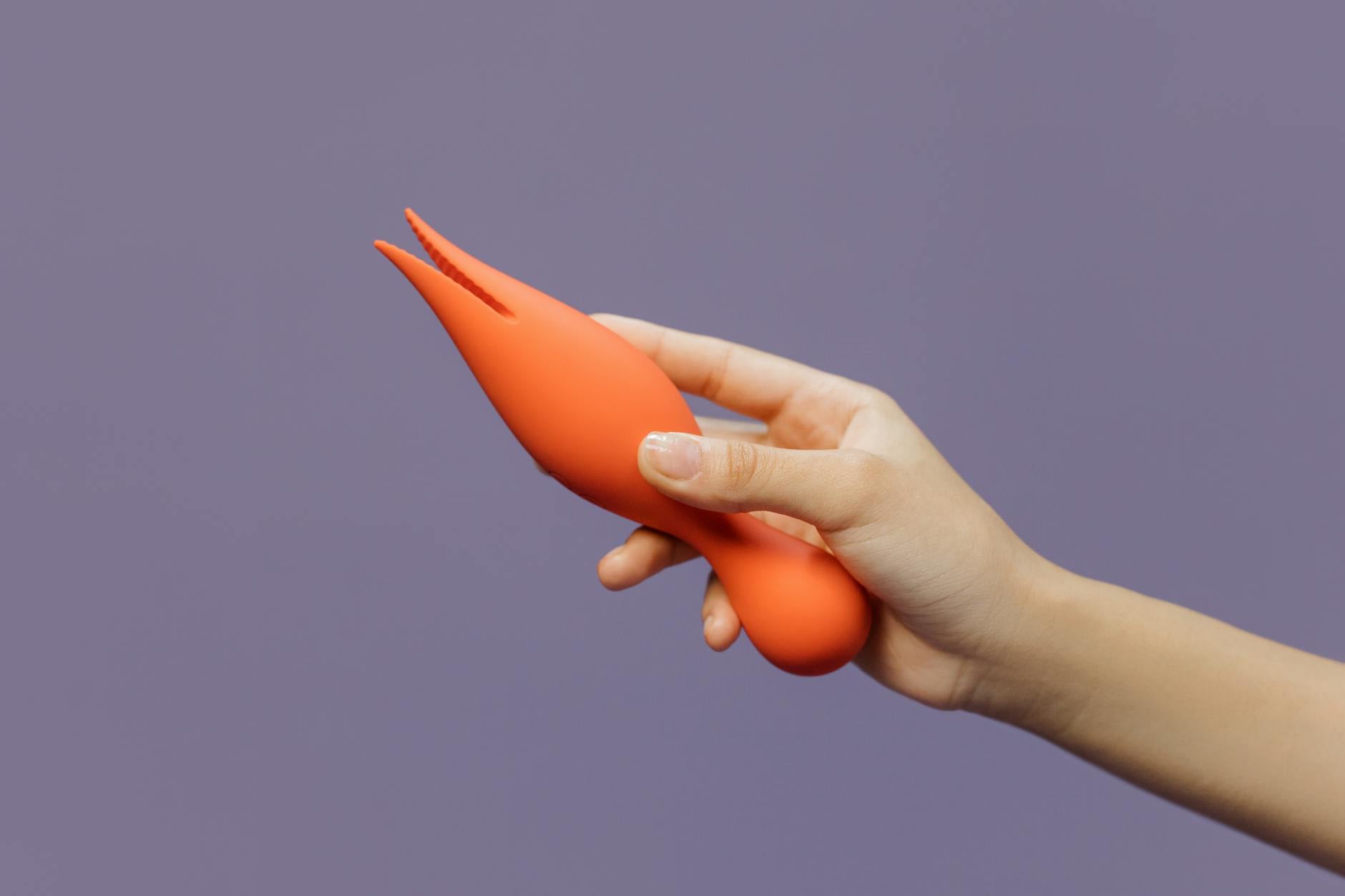
What nobody tells you about sensitivity and aging
Let's be real: nobody warns you that your clitoris gets more sensitive as you age. The cultural narrative is the opposite. We're told sensation fades, pleasure flattens, everything gets numb. That's partly true for some people in some ways. But it's incomplete.
Here's what actually happens: the tissue around your clitoris thins slightly with age and estrogen changes, which can make the nerve endings feel more exposed and reactive. That means some women who've used the same vibrator at the same settings for 15 years suddenly find those settings feel overwhelming. Intensity that once felt perfect now borders on uncomfortable. And that's not a sign you're broken. It's a sign your body is asking you to recalibrate.
Why heightened sensitivity is common after 45
There are three physiological reasons your clitoris might feel more sensitive as you get older.
First, the protective tissue layer thins. Your clitoris is essentially a bundle of thousands of nerve endings, and it's usually covered by a hood of tissue. As estrogen drops, that hood becomes thinner and more delicate. The nerve endings aren't more numerous, but they're less insulated. Direct stimulation that felt gentle before can feel sharp or overwhelming now.
Second, your pelvic floor changes. If you've spent decades with some baseline tension in your pelvic floor (stress, sitting, childbirth recovery), that tension can actually make sensation feel duller over time. Your nervous system adapts. When that tension finally eases around midlife, either naturally or through work like pelvic floor physical therapy, you suddenly feel sensation more acutely. It's like turning up the volume on a speaker that's been quiet for years.
Third, blood flow patterns shift. Aging typically means slightly reduced circulation overall, which sounds like it should make things numb. But localized sensitivity often increases because the tissue is working harder to register sensation with less blood flow. It's a trade-off your nervous system makes.
None of this means your sexual response is worse. It just means it's different, and lemon vibrators can be adjusted to match that shift.
Starting lower and building from there
If you've been using vibrators at a medium or high setting for years, the first adjustment is counterintuitive: go lower. Start with pattern 1 or 2 on your lemon clitoral vibrator instead of jumping to your usual pattern.
This isn't forever. It's reconnaissance. Spend 2-3 sessions exploring what the lower patterns actually feel like now. You might be shocked how satisfying they are. Some people find they can build to much higher intensity this way because they're not starting from a place of overstimulation.
If you skip this step and go straight to your old settings, you're likely to feel defensive and pull away. That teaches your nervous system that the vibrator is "too much," which can create a feedback loop where pleasure feels harder to access. But if you start low and consciously build, you're signaling safety to your nervous system. That changes everything.
The rhythm matters more than the intensity
Here's something I've noticed working with people navigating increased sensitivity: the pattern matters more than raw power. A gentle rhythm that you sync with your breath can be more satisfying than maximum intensity applied in a chaotic way.
Try this: start your lemon vibrator on pattern 1 and breathe deeply for 3-5 cycles. Notice whether your nervous system is settling or tensing. If it's settling, you've found your baseline. If it's tensing, go even lower or try a different pattern. Once you've found a rhythm that feels good, focus on staying there for a while before increasing intensity.
Many people with increased sensitivity report that longer sessions at lower intensity produce more intense orgasms than shorter sessions at higher intensity. Your nervous system has time to fully activate. The pleasure builds in layers instead of spiking and crashing.
Indirect stimulation becomes your friend
If direct contact feels overwhelming even on the lowest settings, indirect stimulation is not a downgrade. It's a different skill, and it often produces deeper sensation.
Try using your lemon vibrator through fabric: underwear, a thin cotton layer, or your hand. This creates just enough buffer to soften the intensity while keeping all the good vibration. You can also angle the vibrator so it's stimulating the area around your clitoris rather than directly on it.
Some people find that starting with indirect stimulation, then gradually moving to more direct contact over the course of a session, allows their nervous system to ease into sensitivity rather than being shocked by it. There's zero shame in this. It's just smart design.
The role of warm-up and arousal
When sensitivity increases, warm-up becomes non-negotiable. What used to feel fine after 2 minutes now needs 10-15 minutes of foreplay, solo exploration, or lighter touch first.
Your clitoris becomes more responsive when blood flow to the area is already activated. So spend time kissing, touching, using your hands, or using a lower vibrator setting to wake up the nerve endings before you move to your preferred sensation level. This isn't wasting time. This is supporting your body's capacity for pleasure.
If you're with a partner, communicate this clearly: "I need more warm-up time now, and that's actually a gift because it means we get to spend more time together before intensity kicks in." Most partners respond well when they understand it's not rejection, it's recalibration.
When to check in with a healthcare provider
Increased sensitivity is usually fine and manageable. But if you're experiencing actual pain rather than just heightened sensation, or if the sensitivity suddenly appeared alongside other changes (itching, discharge, visible redness), that's worth a conversation with a gynecologist.
Genitourinary syndrome of menopause, or GSM, can sometimes feel like heightened sensitivity when it's actually tissue inflammation. A doctor can tell the difference and recommend topical treatments if needed. Your pleasure matters, and so does ruling out anything that needs clinical support.
Using your lemon vibrator in new ways
Increased sensitivity is also an invitation to experiment with your lemon vibrator in ways you might not have before. Try using it for a longer buildup and a longer plateau instead of racing to orgasm. Try patterns you skipped before. Try longer sessions at lower intensity. Try using it with partners differently than you have in the past.
Some people find that once they've adapted to increased sensitivity, their orgasms feel richer and more layered. You might discover you can have longer pleasure sessions, or multiple orgasms more easily, or sensations you couldn't access when sensation was flatter.
That's not compensation for getting older. That's genuinely new access to pleasure that comes from understanding your body at a different life stage.
Common questions about aging and vibrator use
Can I still use vibrators if my clitoris is very sensitive?
Absolutely. Sensitivity and vibrator use are not incompatible. You just adjust the settings and approach. Lower patterns, longer warm-up, indirect contact, shorter bursts. Many people with sensitive clitorises find that the control offered by a lemon vibrator (multiple patterns, ability to modulate) actually makes pleasure more accessible than before.
Will using a vibrator make my clitoris even more sensitive?
No. Vibrator use doesn't increase sensitivity over time. What can happen is that regular, conscious pleasure practice helps you recalibrate and recognize sensitivity you already have. Your nervous system learns to interpret sensation as pleasure rather than threat. That's the opposite of making things worse.
How often is it safe to use a vibrator if I have increased sensitivity?
Daily is fine if you want to. There's no limit on how often you use a vibrator. Just listen to your body. If you notice any irritation (redness, soreness, discharge changes), take a break for a few days. If you're feeling good, keep going. Your body will tell you what it needs.
Does increased sensitivity mean I'm approaching menopause?
Increased clitoral sensitivity can be one sign of perimenopause or menopause, but it's not a reliable indicator on its own. You could also experience it from hormonal birth control changes, stress, pelvic floor work, or just normal aging. If you're curious about your hormonal status, talk to your doctor. But increased sensitivity doesn't require an explanation or a diagnosis. It just requires adjustment.
Should I use a different type of vibrator if my clitoris is more sensitive now?
Not necessarily. Your existing vibrator probably works fine, it just needs different settings. If you've been using a traditional vibrator and you're looking to try something new, suction-style vibrators like lemon sexual toys can feel gentler because they use air pressure instead of direct mechanical vibration. But there's no requirement to switch. Adjusting settings and approach is usually enough.
How long does it take to adapt to using vibrators with increased sensitivity?
Most people notice a difference within 3-5 sessions once they've dropped their intensity level. Your nervous system adapts quickly when you're being patient and intentional. But the full adjustment, where increased sensitivity becomes something you're genuinely happy about, usually takes 2-4 weeks of regular exploration.
The opportunity in the shift
Increased clitoral sensitivity as you age is presented as a problem in almost every conversation about aging and pleasure. But it doesn't have to be. It's a signal that your body is asking for something different. And when you listen to that signal instead of fighting it, pleasure often becomes more accessible, not less.
Your lemon vibrator is still your tool. You're just using it smarter now. Start lower. Build slower. Pay attention to rhythm over intensity. Warm up longer. Use indirect contact when it feels right. These aren't compromises. They're techniques that work with your body instead of against it.
Your pleasure at 50 doesn't have to look like your pleasure at 30. It can be better.
FAQ
Why does my clitoris feel almost painful when I use my vibrator now?
That sharp feeling usually means you're starting too high. Drop to the lowest pattern and spend time there without judgment. You might also try indirect contact or a single quick burst instead of continuous vibration. If the pain persists or is accompanied by redness or discharge, check in with a gynecologist.
Can increased sensitivity mean I'm having a health problem?
Increased sensitivity on its own is usually just a normal part of aging or hormonal shifts. But if it appears suddenly alongside itching, burning, discharge changes, or visible irritation, that warrants a conversation with your doctor. They can rule out infection or inflammation.
I've been using vibrators for decades at high settings. Do I have to slow down now?
You don't have to do anything. But if you're experiencing discomfort or that sensation of "too much," dropping down and exploring lower patterns might reveal a new preference you didn't know existed. Some people eventually return to higher intensity. Some find they prefer lower. There's no right answer, just what works for your body now.
Is increased sensitivity a sign I should stop using vibrators?
Not at all. It's actually a sign you're noticing your body more closely. Vibrators are adaptable tools. Lower settings, different patterns, indirect contact, varied approaches. You can continue to use and enjoy lemon vibrators as your sensitivity shifts. Lots of people do.
How do I talk to a partner about increased sensitivity?
Be straightforward: "My body is feeling sensation differently now, and that's normal. I'm still interested in pleasure, I'm just adjusting how we approach it." Most partners appreciate clarity and the invitation to explore together. If you want to try a lemon clitoral vibrator together for the first time, framing it as "let's explore this together" opens conversation instead of closing it down.