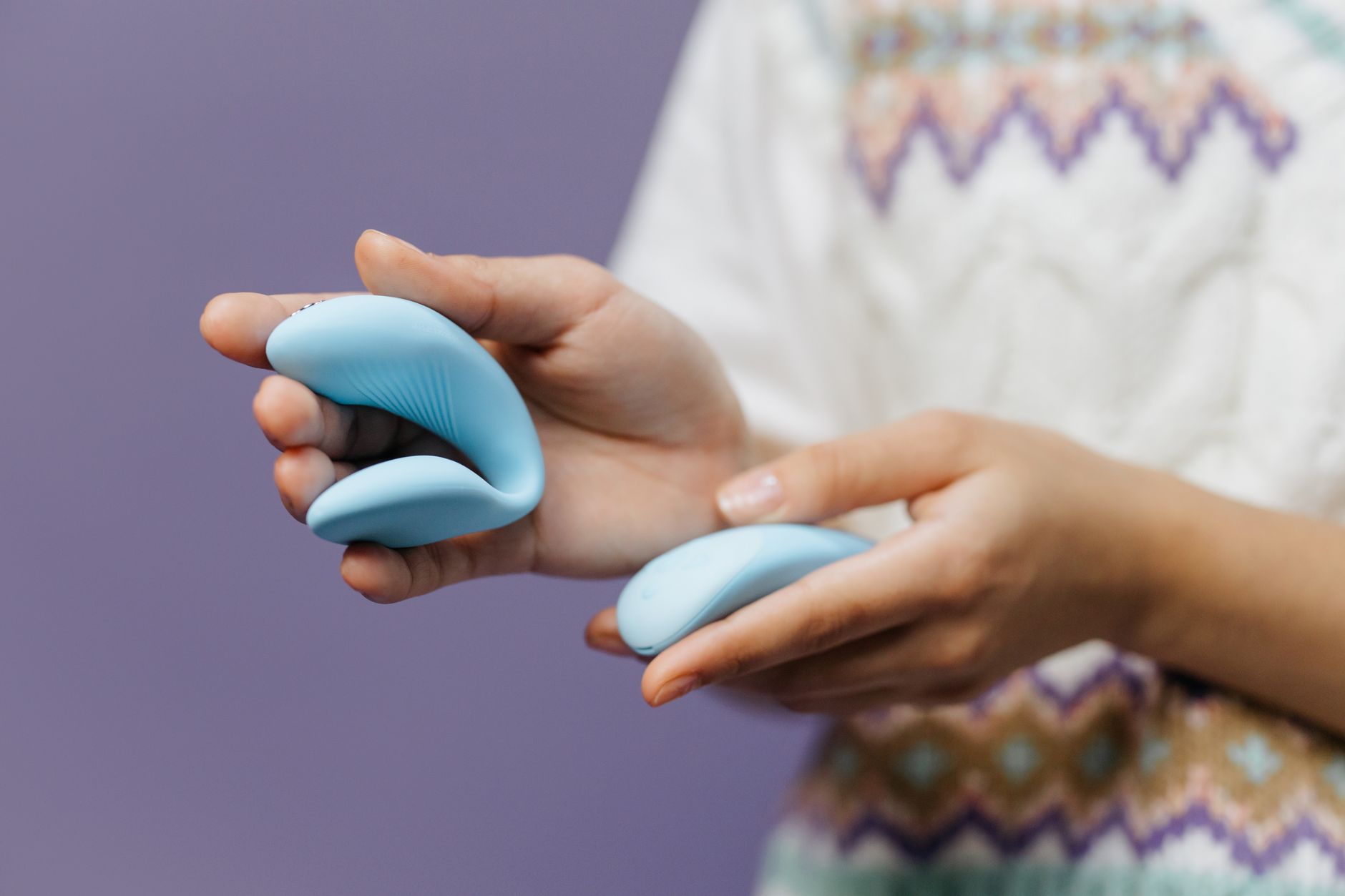
How to Use Lemon Vibrators When Partners Have Mismatched Libidos
When one person wants sex three times a week and the other wants it twice a month, lemon vibrators offer a path forward that doesn't rely on compromise or resentment.
Let's start here: mismatched libido is the most common sexual problem couples face. Not premature ejaculation, not difficulty orgasming. Wanting sex at different rates. One partner aching for connection several times a week while the other feels content once monthly or less. The gap is real, it's painful, and it's solvable.
The problem is that most couples treat libido mismatch as an arithmetic problem. The higher-desire partner thinks "I need sex three times a week." The lower-desire partner thinks "I can manage twice a month." So they split the difference and nobody's happy. The person who wants more feels rejected. The person who wants less feels pressured and resentful. Resentment kills arousal faster than anything else.
Here's what actually helps: separating partnered sex from solo pleasure.
First, a fact: desire mismatch is rarely about how much someone loves their partner. It's biology, stress, and opportunity cost. One partner might have lower baseline sexual appetite due to hormones, medication, or neurology. Another might be carrying the mental load of the household, making them too depleted for sex. A third might have performance anxiety that makes sex feel like work instead of play.
When you collapse all pleasure into "partnered sex," the lower-desire person feels constant pressure. Their brain learns to avoid the bedroom because every touch carries the weight of expectation. They're not relaxed. They're not present. And if they do have sex, it's often just to manage their partner's need, not because they want it. That's not intimacy. That's labor.
Lemon vibrators solve this by creating a third category: solo pleasure that exists alongside partnered sex, separate from it. Not as a substitute (though sometimes it is). Not as a band-aid. As a completely legitimate and valuable part of your sexual life, regardless of whether you and your partner are on the same frequency.
Here's what I see shift in couples when they embrace this framework:
The higher-desire partner stops waiting for their partner to be ready. On Monday night, they might want sex and their partner doesn't. Instead of initiating, turning down, and building resentment, the higher-desire person has an option: they can use a clitoral vibrator like the Lem for solo pleasure instead. That release matters. That orgasm counts. It's not "settling." It's honoring their own body.
Meanwhile, the lower-desire partner loses the guilt. They're not denying their partner anything because their partner isn't waiting for them anymore. Paradoxically, when the pressure evaporates, desire often returns. Not always. But often. People are wildly more interested in sex when it doesn't feel like an obligation.
Then, when both partners do have desire at the same time, that sex is actually good. Nobody's coming in depleted or resentful. Nobody's performing. Both people are there because they want to be.
Why lemon clitoral vibrators work better than other tools for this particular problem comes down to how they feel and how fast they work. Lemon vibrators use gentle suction and pulsing patterns that build arousal efficiently without requiring prolonged stimulation. For a partner who wants quick, reliable pleasure without a forty-five-minute production, that matters.
If you're the higher-desire partner and you're using a lemon vibrator solo, you're looking at fifteen to twenty minutes from start to finish. That's fast enough that you're not disappearing into the bedroom for hours while your partner waits. You're also getting genuine pleasure, not a rushed mechanical thing.
If you're the lower-desire partner and you're considering using lemon vibrators with your partner (not instead of them, but alongside them), the experience is different too. Many lower-desire partners report that their resistance softens when they're not relying solely on partnered penetration or manual stimulation. A lemon vibrator removes the performance pressure. You can enjoy sensation without the cognitive load of "Am I taking too long? Should I be more enthusiastic?"
This is the crucial conversation. Not "Let's use vibrators," but "Let's separate solo pleasure from partnered sex." Here's how to frame it:
"I love you and I'm not satisfied with how we're handling desire right now. Nobody's happy. I want sex more often than you do, and you feel pressured, which makes sense. Here's what I'm thinking: when I want sex and you don't, instead of us having this awkward dance, I'd like permission to take care of that myself. That way, you're not managing my need, and I'm not feeling rejected. And when we both want it at the same time, that sex is actually good because nobody's coming in depleted or guilty. Does that feel fair to you?"
Notice what's missing: "We need to spice things up." "You should want me more." "This is a sign we're not compatible." Those conversations shut things down. This one opens them up.
If you live together and privacy is tight, give each other a discreet signal. Maybe headphones mean "I'm having alone time." Maybe a do-not-disturb sign. The point is that both partners understand what's happening without needing to announce "I'm going to use a vibrator now." Transparency is good. Theater is unnecessary.
If you're worried about your partner feeling hurt or left out, remember: you're not leaving them out of pleasure. You're opting out of a dynamic that wasn't working. That's a gift to both of you.
If you want to use lemon vibrators together sometimes, that's also completely valid. This framework doesn't ban partnered sex. It just means solo pleasure doesn't have to wait for alignment.
Over months, something shifts. The higher-desire partner stops feeling rejected because they're taking responsibility for their own pleasure. The lower-desire partner stops feeling pressured because nobody's waiting for them to want something they don't. And sex, when it happens together, feels like choice rather than negotiation.
I've watched couples move from having sex once a month (both miserable) to having partnered sex twice a month and the higher-desire partner having solo pleasure two or three times on top. So the actual number of sexual experiences climbs. But more importantly, nobody's suffering.
Mismatched libido doesn't have to be a crisis. It's a design problem. And it's solvable.
Not if you frame it correctly. This isn't rejection. This is taking care of your own needs so you don't resent them for not meeting them. Resentment is what kills desire for your partner. Solo pleasure actually protects your relationship because it removes the pressure that kills intimacy. Many couples find that both partners feel relieved once this boundary is in place.
That's worth unpacking together. Often, discomfort stems from feeling threatened or judged. A conversation might sound like: "I want to use this tool to reduce the pressure I've been putting on you. That's about my pleasure, not about you not being enough." If discomfort persists, couples counseling can help untangle the deeper concern. Sometimes it's insecurity. Sometimes it's shame. Either way, it's addressable.
Yes, in an indirect way. When the higher-desire partner isn't desperate and the lower-desire partner isn't dreading sex, the actual experience improves. Lower cortisol, more presence, less performance anxiety. Some couples also find that using lemon vibrators together during partnered sex adds variety without the complication of other toys. The suction sensation is unique and can change the dynamic in a good way.
Don't lead with the vibrator. Lead with the problem. "I hate how we're handling desire. I feel rejected, you feel pressured, and neither of us is happy." Once that's on the table, the tool is just the solution. "I've been reading about how other couples separate solo pleasure from partnered sex, and I think it might help us. Would you be open to trying that?"
It's okay. One partner wanting sex weekly and the other wanting it once monthly is solvable with this framework. The gap doesn't have to close entirely. It just has to become something both people can live with without resentment. That's success.
Very. For some lower-desire partners, the willingness returns once the shame and obligation lift. Not always in a dramatic way. But softness around sex tends to follow relief from pressure. And if desire doesn't return, you've at least removed the painful dynamic that was happening before.
Mismatched libido feels like a choice between your own needs and your partner's comfort. It's not. Using lemon vibrators as a tool for solo pleasure, separate from partnered sex, gives both of you permission to be whole. The higher-desire partner gets their release without waiting. The lower-desire partner gets their peace without pressure. And when you come together, it's because you both want to.
That's not settling. That's design.
If you're struggling with how to navigate desire differences in your relationship, reach out. A conversation with someone trained in relationship dynamics can help you move from resentment to understanding.