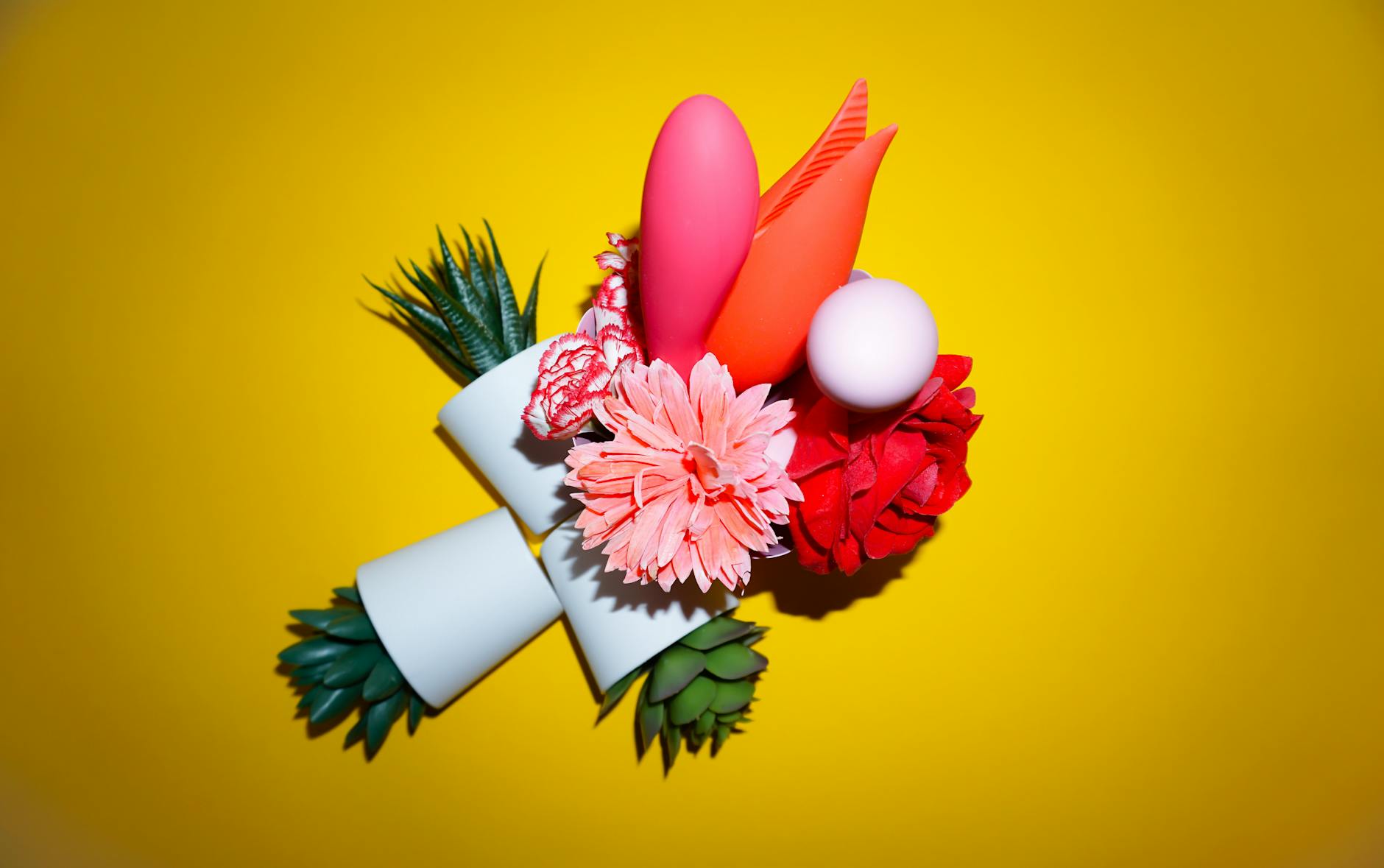
How to Use Lemon Vibrators When Sensation Dulls After Years With the Same Partner
When touch becomes routine, pleasure flattens. Here's how to rebuild arousal, rekindle novelty, and deepen connection using clitoral vibrators designed for this exact moment.
After years with the same partner, pleasure doesn't disappear. It flattens. The touch that once sparked a chain reaction in your nervous system becomes familiar background noise. You still want them. You're still attracted. But sensation itself has dimmed, and that's not a sign the relationship is failing. It's a sign that your body has adapted to routine.
This is called sensory adaptation, and it's as common in long-term relationships as it is misunderstood. Most couples assume it means something is wrong between them. It doesn't. It means your nervous system has stopped treating predictable stimulation as novel, so it downregulates its response. Your brain is doing exactly what it's supposed to do.
What's less widely known: you can work around it. And lemon clitoral vibrators are specifically useful for this, because they introduce a different kind of stimulation entirely.
When you experience the same sensation repeatedly, your nerve endings stop firing as enthusiastically. This is called habituation, and it's neurological, not emotional. Your partner's hands are just as good as they ever were. Your desire is fine. Your body has simply learned to filter out the signal because it happens in the same pattern, at the same pressure, in the same rhythm, week after week.
This is why the first time together creates such intensity. Everything is novel. Your nervous system treats every touch as new information and responds accordingly. By year five or ten, that same touch is no longer novel. It's familiar. Safe. Comforting, even. But not particularly arousing.
The fix isn't to break up or blame your partner. It's to introduce genuine novelty into sexual experience. That's where tools like Lemon vibrators come in.
Lemon clitoral vibrators use pulsing suction rather than vibration, which engages the nerve pathways differently than fingers, penis, or tongue ever could. When you've been touched by a partner for years in a particular way, those neural pathways have become predictable. Suction activates a completely different mechanism.
Think of it this way: your body has learned the vocabulary of your partner's touch. Air-pulse technology uses a language your nervous system hasn't been flooded with. Because the stimulation pattern is genuinely different, your body can't habituate to it as quickly. The sensation feels novel again, even in a long-term relationship.
That novelty triggers a cascade: increased blood flow, heightened arousal, stronger orgasmic response. None of that is dependent on your feelings about your partner. It's pure neurology.
The healthiest way to introduce a lemon clitoral vibrator into a long-term partnership is to frame it as exploration, not replacement. Your partner hasn't failed. The tool is just different.
Start by using it alone first, so you understand how your body responds. Spend a few sessions getting to know the sensation on its own terms. Then, when you're ready, bring it into partnered sex. The way you introduce it matters.
Instead of: "I need this because you're not doing it right," try: "I want to show you something my body is responding to. Can we explore this together?" That shifts the conversation from criticism to curiosity. And curiosity is where real novelty lives.
Many partners find that watching their partner use a lemon vibrator is itself arousing. The visual component, the sound of suction, the evidence of pleasure. These are all novel to them too. Suddenly you're both experiencing something new in the same moment.
If sensory adaptation has flattened arousal with your partner, try these progressions over several weeks:
Week 1-2: Solo exploration. Use your lemon clitoral vibrator alone. Try different intensity levels, different patterns, different timing. Notice what gets your body to respond. This teaches you what novelty feels like.
Week 3-4: Partner presence without pressure. Your partner is in the room, not touching you yet. They can watch, or you can talk through what sensations you're experiencing. This rebuilds eroticism through attention and vulnerability.
Week 5+: Integrated touch. Your partner uses their hands or mouth while you use the vibrator. This creates a hybrid stimulus that's genuinely new for both of you. The combination is different from either stimulus alone.
Here's the thing: introducing a tool into a long-term relationship where sensation has dulled can trigger insecurity. Your partner might worry they're being replaced. You might feel self-conscious. But the conversation that prevents this is straightforward.
You're not saying: "I need this instead of you." You're saying: "My nervous system has adapted to routine, and that's normal. I want to rebuild novelty so I can feel more alive in this body. Will you help me explore that?"
That's honest. That doesn't blame them. And it invites them into the solution, which actually deepens intimacy in a way using the vibrator alone never could.
If your partner is resistant, it's worth asking why. Sometimes it's insecurity, which can be addressed through conversation. Sometimes it's about control or the illusion that your pleasure should be dependent on them alone, which is a bigger relationship conversation. But sometimes it's just unfamiliarity, and that dissolves with time and information.
Lemon clitoral vibrators have a unique advantage when sensation has dulled from years of predictability. Unlike traditional vibrators, which use a buzzing pattern, lemon suction technology creates a pulsing sensation that mimics something the body has never quite experienced in the same way before.
For people who've had the same partner for a decade or more, this difference is crucial. You're not just upgrading the stimulation you're already familiar with. You're introducing a genuinely different sensation category. That difference is what your nervous system needs to wake back up.
Additionally, suction-based stimulation tends to build intensity differently than vibration. It can feel more concentrated, more directional, more controllable. That gives you agency in a way that can feel empowering after years of expecting pleasure to come from your partner's initiative.
Sometimes bringing in a lemon vibrator reignites arousal in a few weeks. Sometimes it takes longer. If you've been in a long-term partnership for 10, 15, or 20 years, your nervous system has had a long time to adapt. Rebuilding sensation isn't always instant.
Be patient with the process. Use it regularly, not just during partnered sex. Let your body relearn what pleasure feels like when it's surprising. Talk with your partner about what you're discovering. Make it part of the relationship evolution, not a secret shame.
If sensation remains persistently dulled after several weeks of consistent exploration, that's worth discussing with a healthcare provider. Sometimes hormonal shifts, medication side effects, or underlying health factors contribute. But in most cases, genuine novelty in stimulation rewakes the nervous system pretty reliably.
Frame it as your body's adaptation, not their failure. Say something like: "My nervous system has adapted to routine, which is normal. I want to explore something that feels novel so I can feel more alive in this body with you." That's honest without blame. Most secure partners appreciate the invitation to explore something together over the alternative, which is silent resentment.
Not at all. In fact, couples who introduce tools together often report stronger intimacy, not weaker. You're solving a problem as a team instead of letting sensation dulling create distance. That's relationship health, not relationship failure.
Some partners worry about that initially. That's why the conversation matters. Explain that you want to rebuild novelty so you can feel more arousal in partnered sex, not less. Most partners understand that more pleasure in the relationship benefits both of you.
This varies, but many people report noticeable shifts in arousal within 2-4 weeks of introducing genuine novelty. Your nervous system doesn't need months to rewake to new stimulation. It just needs something genuinely different.
Absolutely. Solo use of a lemon vibrator can still rebuild sensation in your own body. Many people find that when they've experienced heightened arousal alone with novel stimulation, that translates into more responsive partnered sex with their partner. Your body's capacity for pleasure tends to generalize across contexts.
Openness tends to work better than secrecy in long-term relationships. Secrecy often feeds insecurity. Openness invites your partner into the solution. You're not choosing between your partner and the vibrator. You're choosing to address sensory adaptation as a couple.
Sensation dulling after years with the same partner is so common it's almost universal. You're not broken. Your relationship isn't failing. Your nervous system is doing its job by adapting to routine. But that adaptation doesn't have to be permanent.
Lemon vibrators, with their different stimulation pattern, can help you rebuild novelty and reignite arousal. Used well, they become a tool for deepening intimacy with your partner, not replacing it. The goal is to feel more alive in your own body and more connected in the relationship. That benefits everyone involved.
If you want to explore this further or have questions about how to approach this conversation with your partner, reach out. Sometimes talking it through with someone outside the relationship helps clarify what you're feeling and what you actually want to happen next.