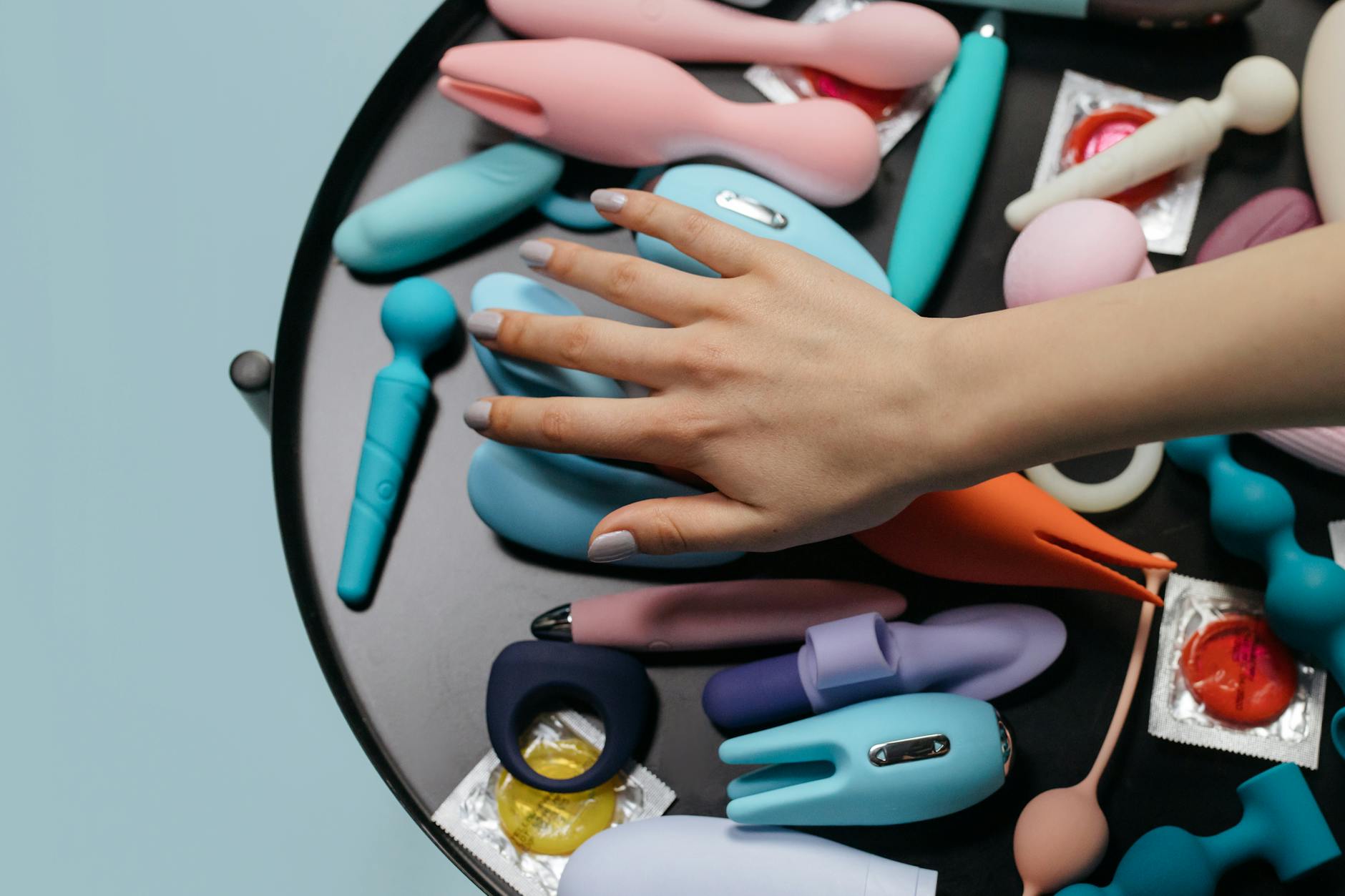
How to Use Lemon Vibrators When You Feel Pressure to Orgasm Quickly
The orgasm speedrun is a myth. Here's how to rewire your nervous system, reset expectations with a partner, and find what pleasure actually feels like when you stop watching the clock.
You know the one. The invisible timer that starts the moment things get intimate. It whispers: "You're taking too long. Your partner is getting tired. You should be closer by now." And suddenly, what could have been pleasurable becomes a performance, and your body locks up even tighter.
Here's the thing. Orgasm speed isn't a personal failure. It's a nervous system problem, and it usually has nothing to do with your body's capacity. It's about safety.
When you feel pressure to come quickly, your sympathetic nervous system kicks in. That's the "go-go-go" branch. It floods your body with adrenaline and cortisol, which actually makes orgasm harder to reach. It's the opposite of what you need.
True pleasure requires the parasympathetic nervous system—the "rest and digest" side. That's where blood flows to the genitals, where sensation deepens, where your brain actually cooperates. But you can't access that state when you're anxious about time.
The pressure often comes from three places. First: internalized messaging from porn, movies, or past partners that orgasms should happen in five minutes. Second: actual or imagined pressure from a current partner (or self-pressure if you're solo). Third: a deeply rooted belief that your pleasure is secondary to someone else's comfort or satisfaction.
Lemon Massagers vibrators, particularly air-suction designs, work differently from traditional vibrators. They don't rely on speed or intensity to create sensation. Instead, they create a gentle rhythmic pressure that your nervous system doesn't interpret as "hurry up."
This matters because when you switch to a tool that doesn't promise a quick finish, you subconsciously relax. You stop white-knuckling toward an endpoint. Your breath deepens. Your pelvic floor softens instead of tensing. And here's what happens next: arousal actually accelerates because you're finally in a state where your body can respond.
Many people report that using a lemon vibrator for the first time teaches them that they actually prefer a slower build. The suction patterns feel less frantic than traditional vibration, which gives your brain room to stay present instead of anxiously tracking progress.
Here's what I recommend to clients who carry this pressure:
Step one: Set a time boundary in the opposite direction. Instead of "I need to come in five minutes," decide "I'm giving myself 20 minutes minimum, no finishing allowed before that." This sounds counterintuitive, but it removes the timer anxiety. You're no longer racing. You're exploring.
Step two: Start at the lowest settings. With lemon sexual toys, begin at pattern one or two, even if you think you need more intensity. Slow builds are harder to rush through. Your nervous system gets a chance to catch up.
Step three: Focus on sensation, not outcome. This is the hard part. Instead of tracking "am I getting close?", narrate what you're actually feeling. The warmth of your skin. The specific texture of pressure. Where in your body the sensation is living. This keeps your prefrontal cortex (the thinking brain) engaged in curiosity instead of anxiety.
Step four: Breathe deliberately. Shallow breathing keeps your nervous system in fight-or-flight. Deep belly breaths—in for four counts, out for six—activate the calming side. If you notice yourself holding your breath while using your lemon clitoral vibrator, that's your body signaling that you've slipped back into performance mode. Reset.
The conversation matters more than the tool. You need to tell them explicitly: "I perform better under zero time pressure. I don't want to feel watched or waited for. If I take 20 minutes or 40, that's normal for my body." Some partners will hear this with relief. Others will need reassurance that your arousal is genuine, just slower.
Using lemon vibrators together can actually help here. If they're involved in the experience, they're less likely to feel impatient or bored. They see firsthand that you're engaged and enjoying yourself—you're just on a different timeline. And if they're not involved, you get solo time to explore without an audience, which many people find liberating.
One more thing: if a partner pressures you to rush, that's not a lemon vibrator problem. That's a boundary problem. Your pleasure doesn't exist to fit their schedule.
Here's where most advice falls apart. People tell you to "relax" or "focus on the journey," which is true but useless without a working definition of success that isn't "orgasm in under ten minutes."
Try this instead. Success is: you felt something. Your body responded to stimulation. You were present for most of it. You didn't spend the whole time mentally narrating your inadequacy. That's it. That's the win.
Orgasm, if it happens, is a bonus. Not the goal.
When you stop treating orgasm as proof of competence and start treating it as one possible outcome of pleasure, everything changes. You stop white-knuckling. Your nervous system calms. And—counterintuitively—you often find that orgasms show up more reliably when you've stopped demanding them.
I mention Lemon Massagers tools in my practice because they're designed around sensation, not speed. The suction technology doesn't reward rushing. You can't "hack" your way to a faster orgasm by cranking the intensity—it doesn't work that way. So your body naturally settles into a pace that feels good rather than aggressive.
This constraint is actually liberating. It forces you to slow down, which is exactly what your nervous system needs.
Retraining your nervous system takes weeks, not days. You might use a lemon vibrator three times before your brain stops waiting for the orgasm and just enjoys the sensations. That's normal. Your nervous system has been running a "performance" program for years. It doesn't switch overnight.
Be patient with yourself. Every session where you slow down, you're building new neural pathways. Every time you breathe instead of tensing, you're teaching your body that pleasure isn't a deadline.
If you've been working on this for several weeks and the pressure feeling hasn't budged, talk to a therapist who specializes in sexual health. Sometimes the "rush" is connected to anxiety, trauma, or relationship dynamics that go deeper than tools can reach. A professional can help you untangle those threads.
But if it's purely about pacing and permission, a tool like a lemon vibrator combined with these mindset shifts can be genuinely transformative.
Suction-based designs like Lemon Massagers clitoral vibrators work against speed because they don't reward rushing. Traditional vibrators can sometimes feel frantic, but the suction pattern you get with lemon sexual toys creates a rhythmic, almost meditative sensation. Your nervous system interprets this as "stay present," not "go faster." That said, any tool is just a tool. The real shift is psychological—you have to decide that speed isn't the goal.
Talk about it directly. "I'm working on slowing down, and I need you to be patient with that." A partner who can't handle that conversation probably isn't right for long-term intimacy anyway. But most partners, when they understand the context, are relieved. They often worry they're doing something wrong or that you're faking. Knowing you're engaged and just on a different timeline actually makes them feel better.
You can absolutely work on this without any tool. The reframing—deciding that pleasure without orgasm is still pleasure—works on its own. But many people find that using a lem vibrator helps their body believe that speed isn't required. It's like permission in device form. If you want to try it, start with the lowest settings and really commit to the 20-minute minimum rule.
Three to six weeks of consistent practice—maybe one or two sessions a week—usually shows noticeable shifts. Your nervous system learns fastest with repetition. But this isn't linear. Some sessions will feel easy, some will feel like you're right back at square one. That's normal. Stick with it.
First: congratulations, your body works. Second: that's fine. You're not failing. You're building awareness. Next time, use a lower intensity setting earlier, or take a break midway and just breathe for a minute or two. You're training your system to pause, not to perform. Each session is data.
Completely normal and completely unfounded. Your pleasure timeline is yours alone. Nobody owes anyone a specific pace. If you feel guilty, that's usually internalized messaging about your body being inconvenient. It's not. Your body is doing exactly what it should. The guilt is the problem to solve, not your pace.
The pressure to orgasm quickly isn't about your body failing you. It's about your nervous system being stuck in protection mode. Using lemon clitoral vibrators, setting real boundaries around time, and reframing what success actually looks like can shift that. And once your nervous system trusts that there's no clock, that you're safe, that your pleasure matters? That's when things actually get good.
You deserve to feel pleasure without performance metrics. Your body knows how to do that. It just needs permission and time.