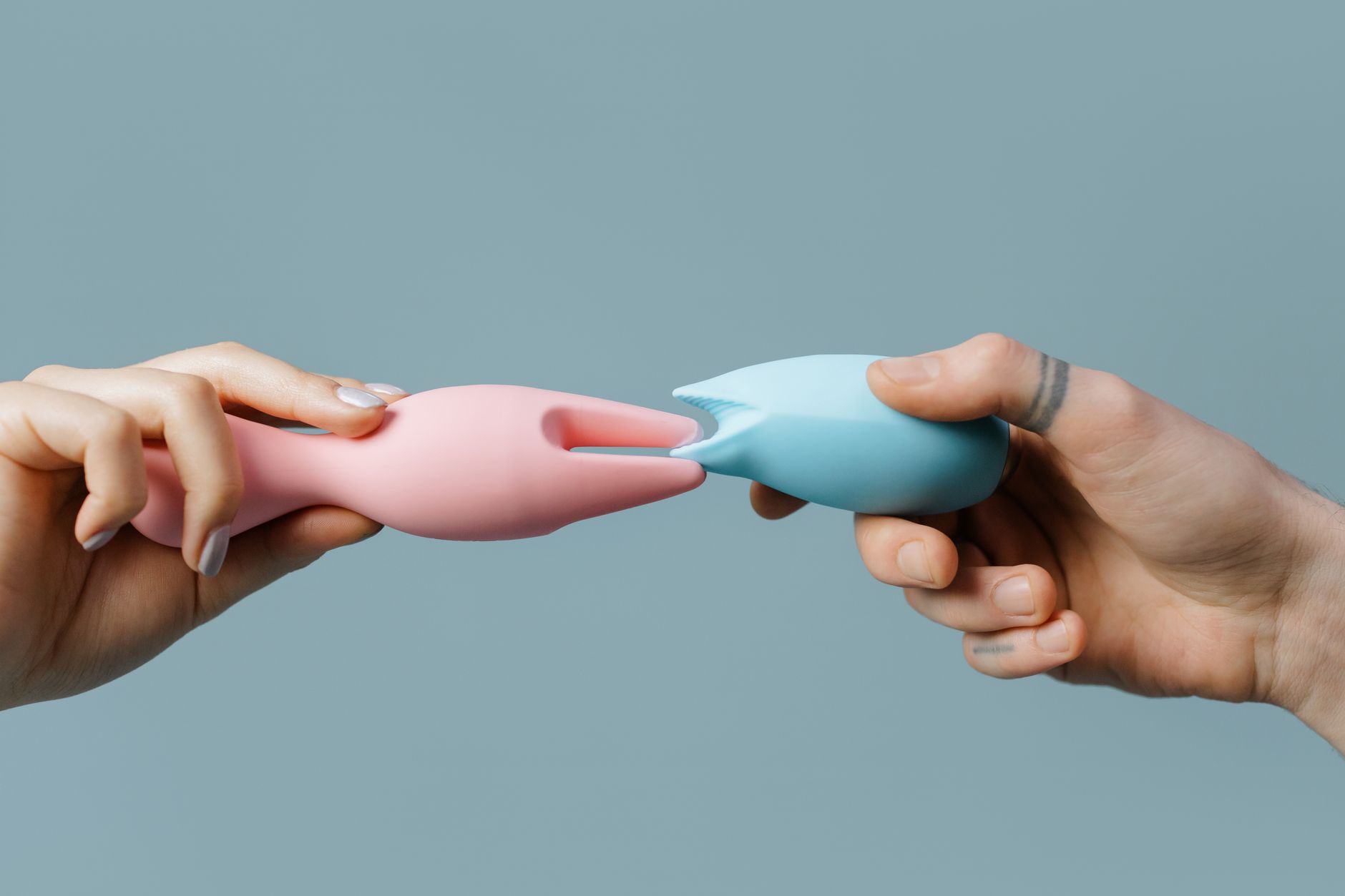
How to Introduce Lemon Vibrators to a New Partner Without Awkwardness
You've found someone worth exploring with. Here's the exact timing, framing, and conversation starter that actually works when introducing clitoral vibrators early in a relationship.
Let's be real. You're probably worried about one of three things: that your new partner will think you're pushing them too fast, that they'll assume you want the toy instead of them, or that bringing it up casually will somehow kill the mood forever. Here's what actually happens when you do it right. None of those things.
Introducing lemon vibrators or any clitoral vibrator to a new partner is not as fraught as your brain is making it out to be. The people I work with who do this smoothly share one thing in common. They frame it as an invitation to explore together, not as a critique of what's already working.
Don't wait until you're already in bed. Don't wait until things feel stale or you're frustrated. The best moment is when you're already comfortable talking about sex in general, but before things feel like they need fixing. This is usually 2 to 6 weeks in, depending on how quickly you both open up.
The timing also depends on how much sexual history you've already shared. If you've been talking about what you like and what you want, a toy conversation flows naturally. If you haven't had that baseline conversation yet, start there first. "What kinds of touch feel good to you" matters before "What kinds of toys do you want to try."
One more piece. The best moment is often when you're NOT about to have sex. Bring it up over coffee or dinner. This takes the pressure off both of you and signals that this is a conversation, not a performance.
Here's what doesn't work: "I want to try something new because what we're doing isn't enough." That reads as criticism, even if you don't mean it that way.
Here's what does: "I've always enjoyed [specific sensation] and I'm curious if you'd want to explore that together. I was thinking about getting a Lemon Massager because [benefit that matters to both of you]." The specificity matters. It shows you've thought about why, not just that you want something different.
Let me give you some concrete openers:
If you want to focus on shared pleasure: "I've read that clitoral vibrators can make orgasms feel different and more intense. Would you be interested in trying that with me? I think it could be really fun to explore what works for your body alongside mine."
If you want to emphasize variety without pressure: "I love what we're doing. I'm also curious about other ways we could touch and feel. I was thinking about getting a lemon vibrator. No pressure if you're not into it, but I'd love to try it together if you want."
If you want to make it collaborative: "What does pleasure look like for you in a relationship? What would you want to try?" Listen. Then add, "I've been thinking about this, and I'm curious if toys might be part of that for us."
Notice what's consistent. You're saying yes to what already exists, not no to it. You're expressing curiosity, not demands. You're making room for their answer, whether that's yes, no, or let me think about it.
Most partners aren't saying no to the toy. They're saying no to what they think the toy means. They think it means you want them to be someone different. They think it means sex isn't good. They think it means they're not enough.
Your job is to separate the tool from the relationship. "This isn't about you or what we're doing. It's about me wanting to explore more of what feels good, and I want to do that with you. It's like how I might enjoy adding honey to tea without meaning I didn't like the tea before."
If they're still hesitant, don't push. Some people need time. Some people need to see the toy first, not just hear about it. Some people need to know this isn't a dealbreaker for you if they stay hesitant. Give them that.
But also know when hesitation is just unfamiliarity versus when it's a deeper no. There's a difference between "I've never done this and it feels weird" and "I'm uncomfortable with toys in my relationships." One can shift with time and conversation. The other might be about values. That matters for knowing whether you're compatible long-term.
Start low. I don't mean low intensity, though that's good too. I mean low expectations. You're not trying to give them the best orgasm of their life. You're trying to see how you both feel about it in real time.
Talk through it first. "I'm going to try this at setting 2. If it feels too intense or weird, just let me know and we'll slow down or stop." That permission matters. It takes the pressure off both of you.
Watch for what they actually enjoy, not what you think they should enjoy. Some people love the buzz of a lemon clitoral vibrator immediately. Some people need a few minutes to adjust. Some people like it at only certain points in their arousal cycle. All of that is normal.
Use lube. Always. Silicone vibrators like the Lemon Massager work beautifully with water-based lube, and it reduces friction, which new partners especially appreciate because they're often more sensitive to pressure when they're nervous.
Honestly? The hottest thing you can do is stay curious and connected. That means asking, "How does that feel?" and actually listening. It means noticing if they're tense and being willing to pause. It means treating this like foreplay, not like a performance you need to nail.
Don't ghost the experience. In the next day or two, just check in casually. "That was fun. Want to do that again?" or "How did that feel for you?" Some people need a little processing time before they know how they feel. Some people loved it immediately and want to experiment more. Both are fine.
If it went well, you know you have a partner who's open to this conversation. That's huge. It means you can introduce new things without the weight of wondering if they'll freak out. It also means they might bring ideas to you, which is even better.
If it felt awkward or didn't work, that's also fine. Some people aren't vibrator people, or they're not vibrator people in the early stages of a relationship. You can revisit it in a few months when you're more comfortable, or you might find your pleasure together looks different. The point is that you had the conversation and survived it.
When you can talk about desire early, you're setting a pattern for the whole relationship. You're saying it's okay to ask for what you want. You're saying pleasure matters to both of us. You're saying I trust you enough to be vulnerable about what I want to explore.
That foundation changes everything. It means when you hit the predictable rough patches that come later, you already know how to ask for something different. You already know your partner isn't going to assume the worst. You've practiced the conversation.
It also means you're less likely to resent each other later. Resentment often comes from unspoken wants that pile up over years. You're preventing that now, at the beginning, when things still feel light enough to talk about openly.
Some partners worry that using a vibrator means they're somehow failing you. That their body or their touch isn't enough. This comes up more than you'd think, and it's worth naming directly.
You can say something like: "A vibrator isn't a replacement for you. It's a different sensation. Like how I might enjoy a massage without meaning your hugs aren't great. It's not better or worse. It's just different, and I like having options with you."
You can also be practical. "My body sometimes needs this specific kind of stimulation to orgasm, especially when I'm in my head or stressed. Having a way to get there makes sex more enjoyable for both of us, because I'm not frustrated." That's true for a lot of people, and it reframes the toy as something that helps, not something that competes.
If they're still worried, show them how you'd use it together. Not as a performance, but genuinely. "You can hold it. You can control the intensity. You're part of this." That changes the story from me and the toy to us and the toy.
If your sexual history comes up naturally, mention it. It normalizes the fact that you have preferences and experience. If it doesn't come up and you don't feel like volunteering, you don't have to. What matters is that you're introducing this toy now with them, in this relationship. The past is less relevant than the present.
That's amazing. You've found someone with the same openness. Go with it. You can still have all the same conversations about comfort, boundaries, and what you both want to explore. The only difference is the order.
The clitoral vibrator is the most popular for partnered use because it's versatile and works whether someone is touching themselves or their partner is using it. It's also easy to use alongside penetration if that's part of what you want to explore. The key is picking one that both of you feel comfortable holding and that has a range of intensity so you can adjust as you go.
Listen for the difference between "yes, that feels good" and "sure, okay." One is engaged. The other is resigned. You can also watch for physical cues. Are they tense? Is their breathing shallow? Are they making eye contact? Those matter. If you're ever unsure, ask directly. "Are you enjoying this, or should we try something different?"
Respect that. It doesn't mean the relationship is doomed. It means you have a partner who draws a boundary here, and that's information. You get to decide whether that works for you. Some people need penetration-based pleasure. Some people are uncomfortable with toys, period. Some people are open but not yet. These are real preferences, and you get to have yours too. If they're incompatible, that's what you learn now.
You can introduce lemon vibrators to a new partner with confidence because you're not asking them to be different. You're inviting them to explore more of you with you. When you frame it that way, when you pick your moment, when you actually listen to their answer, most partners say yes or stay curious long enough to want to try it.
The ones who don't? That's useful information too. It tells you something about compatibility before you're five years in and quietly resentful. That's worth knowing early.
If you have questions about how to navigate the conversations in your relationship, reach out. I'm here to help you build the kind of partnership where pleasure, honesty, and curiosity are normal.