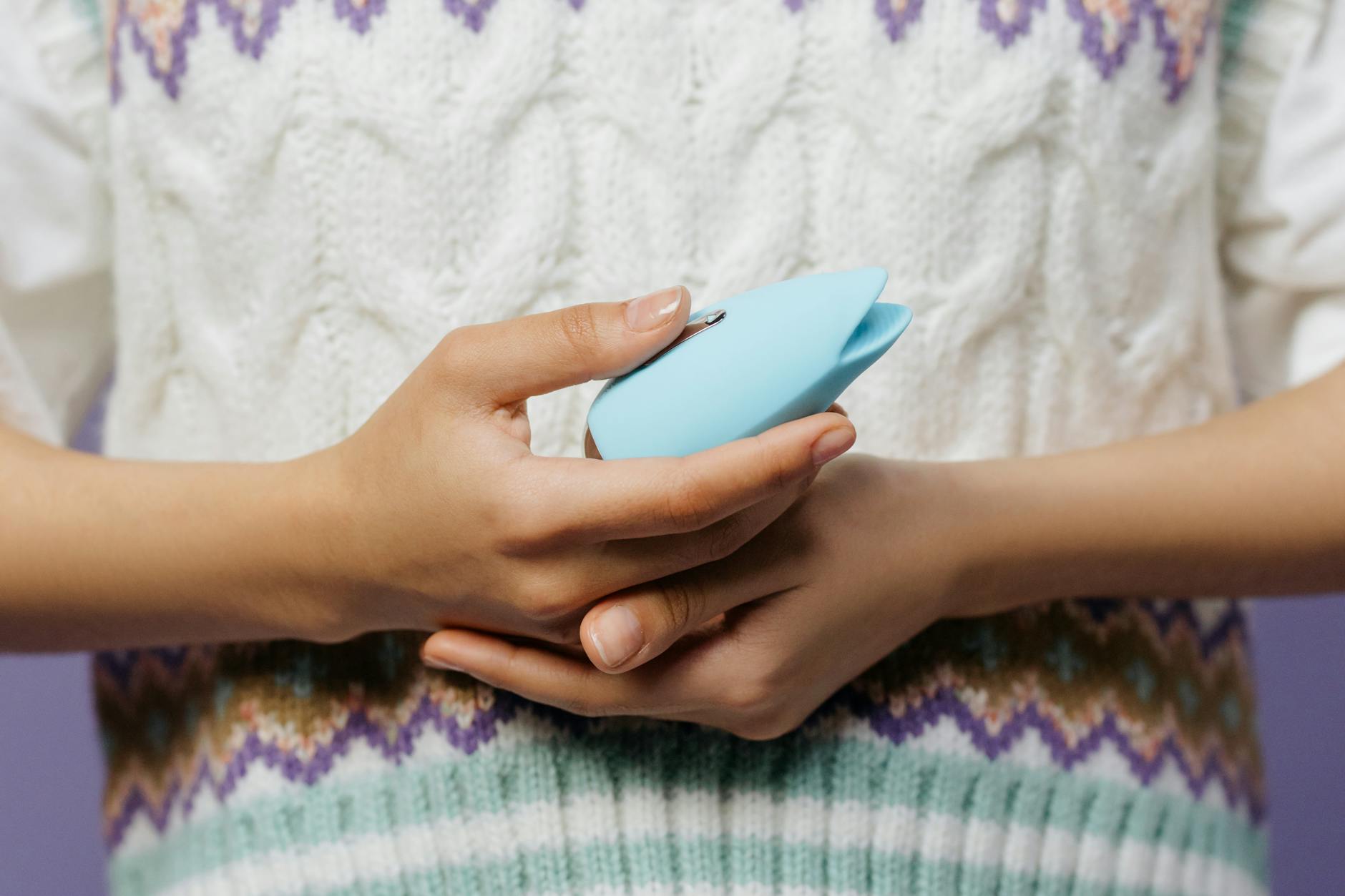
Most of us learned sex from movies. Quick, urgent, synchronized orgasms. That's not real life, and it's definitely not the best life. Slow arousal with a partner is actually where the depth happens. It's where you learn each other's rhythms, where anticipation builds into something that feels genuinely sustainable, and where both people's nervous systems have time to catch up.
Lemon vibrators, especially clitoral vibrators like the Lem, are perfect for this because they let you stay present and communicative instead of rushing toward a finish line. When you use a lemon vibrator slowly with a partner, you're not just adding a toy. You're adding permission to pause, to check in, to build something that doesn't have to end the moment someone orgasms.
Your nervous system has two speeds: sympathetic (the gas pedal, the rush) and parasympathetic (the brake, the calm). When couples rush into sex, they stay mostly sympathetic. Heart racing, breath shallow, focused on performance. That's not where pleasure lives. Pleasure lives when you can swing gently between both states, building and then backing off, building again.
When you introduce a lemon clitoral vibrator slowly into foreplay with a partner, something shifts. You're forced to talk about it. You have to pause and establish comfort. You can't just go through the motions. That vulnerability actually deepens arousal because it deepens trust. And trust is the actual foundation of sustainable pleasure in long-term partnerships.
Also, here's the neuroscience part. When arousal builds slowly, you activate more of your cortex (the thinking brain) and spend less time in the amygdala (the fight-or-flight brain). That means you can actually enjoy the sensations instead of being in a perpetual state of reaching. You're more present. You last longer. You remember it afterward.
This sounds obvious but almost nobody does it. If you're going to use a lemon vibrator with a partner while building arousal slowly, the room needs to support that intention. Not in a "rose petals" way, but in a practical way.
Kill the overhead light. Use a lamp with a dimmer, or just close the curtains and let in afternoon light. Remove your phone from arm's reach. Not just out of sight. Out of arm's reach. You want friction between you and distraction to feel higher than friction between you and pleasure.
Temperature matters. You want to be warm enough that you're not tense, but not so warm that you're sweating into discomfort. Have water nearby because slow sessions last longer and your mouth gets dry. Have a small towel or the lube bottle within reaching distance so you're not scrambling mid-flow.
Start with your partner touching you without the vibrator. Hands, lips, breath. This takes about 10 to 15 minutes and most couples skip it entirely because they feel like they should rush to the main event. Don't. This is the main event.
When you're ready to introduce the lemon vibrator, start on the lowest setting. Not because you need warming up (though you might), but because the surprise and anticipation of it entering the experience is already arousing. You don't need to compound that with maximum intensity.
Here's the rhythm that works: use the vibrator for about two minutes at a steady, medium intensity. Then your partner pauses it completely and touches you without it. This creates a contrast that makes your nervous system wake up. The sensitivity spikes when stimulation stops and then restarts.
Alternate between vibrator on and vibrator off. You're building arousal in waves, not a straight line. Each wave can last two to five minutes depending on what feels good. Most people find that doing this for 15 to 25 minutes creates an intensity that feels sustainable and deeply pleasurable.
If you're the partner holding the vibrator, pay attention to breathing. When your partner's breathing gets shallower and faster, you're in the right zone. If they're holding their breath, you've probably ramped up too fast.
This is where most couples get awkward. They think communication has to sound clinical. "Is this pressure level acceptable?" No. That breaks everything.
Instead, develop a simple system. Your partner can say "more," "less," or "same." That's it. Or use hand signals. Squeeze your partner's hand once for more, twice for less, three times to stay where you are. You're still touching. You're still connected. You're just getting clarity.
The person holding the vibrator should check in without asking permission. Instead of "Do you like this?" say "I'm going to slow down now," or "I want to try this pattern," or "Tell me if this is too much." You're leading gently, not interrogating.
If the arousal stops or drops unexpectedly, pause completely. Don't immediately ramp up intensity trying to fix it. Just ask simply: "What do you need?" Sometimes it's a physical thing (shift position, your hand moved, the angle changed). Sometimes it's emotional (they got distracted, something felt off, they need a breath). Both are valid. Both are information. Both deserve curiosity, not frustration.
Lemon clitoral vibrators, like Lemon Massagers' devices, use suction and pulsation patterns that don't require direct friction the way traditional vibrators do. That means they're gentler on sensitive tissue and they actually work better when you're focusing on slow arousal instead of quick climax.
The pattern variations let you shift stimulation without stopping. You can move between rhythms seamlessly, which keeps that wave effect going. And because they're designed for external clitoral work specifically, there's no confusion about what they do or how to use them. Everyone involved understands the purpose immediately.
When you slow down the buildup, your body has time to produce more natural lubrication. Your nervous system has time to fully activate. Your partner has time to feel truly present instead of performing. And most importantly, you have time to actually communicate what feels good instead of guessing.
This isn't about prolonging sex like some kind of endurance test. It's about deepening the experience so it's more satisfying for both people. Research on couples' satisfaction shows that partners who take time for extended foreplay report higher emotional connection afterward. They also report better communication in other areas of their relationship. Slow arousal with a vibrator isn't just a sex thing. It's a relationship thing.
The best time to start using a lemon vibrator slowly with your partner is not during high-pressure sex when you're both tired and expecting quick results. Start during a lower-stakes situation. A weekend afternoon. A night when you're both already relaxed. When there's genuine time and no external pressure to finish or perform.
Try it once without expectation. Some couples love it immediately. Others need a few sessions to figure out what works. That's fine. You're building a new skill together, and skills take practice.
If you're using a lemon clitoral vibrator slowly with your partner and arousal still feels stuck, it's usually one of three things. First, you're still going too fast despite intending to go slow. Time dilates when you're aroused. What feels like 15 minutes is often five. Actually set a timer.
Second, there's something unresolved between you emotionally. This is where a coach or therapist who specializes in couples' intimacy can help. You can't pleasure yourself into emotional connection if the connection isn't there.
Third, you need different types of stimulation. Some people need mental engagement (fantasy, dirty talk, role play). Some need physical sensation variety. Some need their partner to be in a specific emotional state. That's all normal. And all of it is worth exploring.
When you commit to slow arousal with a partner using tools like Lemon Massagers' clitoral vibrators, something shifts in how you relate to each other generally. You start checking in more during sex. You start being more direct about what you want. You start tolerating pauses and awkwardness instead of rushing past them.
Those skills transfer. You become better at saying no to things you don't want. Better at asking for what you do want. Better at sitting with discomfort instead of just pushing through it. All of that makes the relationship feel safer. And safety is where real, sustainable pleasure lives.
If you're curious about how to start this conversation with your partner, or if you're feeling stuck in any of these areas, reaching out to someone trained in couples' communication might help. You deserve a sexual partnership that feels connected, intentional, and genuinely pleasurable for both of you.
How long should foreplay last before using a lemon vibrator with a partner?
Think 10 to 15 minutes minimum of hands and touch before introducing any toy. This gives both nervous systems time to settle into arousal instead of staying in task mode. If you're new to slow arousal together, err toward longer. The rush to add the vibrator usually means you haven't actually built enough baseline arousal yet.
Can slow arousal with a vibrator help if my partner and I have different sex drives?
Yes, often. When you slow down the entire process, mismatched libidos become less about one person pushing for more and the other defending their boundaries. You're syncing around pleasure instead of around performance. That said, [mismatched desire is sometimes about deeper partnership stuff], so if this is a chronic tension, it might be worth exploring with a relationship coach.
What if I'm nervous about using a lemon vibrator with my partner because they think toys "ruin" sex?
Start the conversation outside the bedroom. Not during sex, not when you're both in a vulnerable state. Say something like, "I've been thinking about trying something together that might feel really good for both of us. I'd love to talk about it when we have time." Then listen to what comes up without defending your idea. Sometimes resistance is about feeling replaced or inadequate. Sometimes it's about control. Understanding which one it is changes how you move forward. If you're hitting a wall, [how to introduce lemon vibrators to a partner without awkwardness] covers this in more depth.
How do I know if I'm using the vibrator too intensely during slow buildup?
Your partner will tell you one way or another. Either verbally or through their body. Signs of too much too fast: they tense up, their breathing gets shallow, they go quiet, they pull away even slightly. Signs you're in the right zone: they're breathing deeper, they're making soft sounds, they're actually making eye contact, their body stays relaxed.
Is slow arousal with a vibrator something we should do every time we have sex?
No. Sometimes you both want quick, urgent connection. That's healthy too. Think of slow arousal as a rhythm you rotate into, not a standard you maintain all the time. Maybe it's once or twice a week. Maybe it's a weekend thing. Maybe it's something you do when you both specifically want deeper connection. Variety actually matters for long-term couples' satisfaction.
What if one partner wants slow arousal and the other wants faster sex?
That's just mismatched preference, and it's solvable. You can do slow arousal with a vibrator sometimes and faster connection other times. You can also do slow buildup that leads into faster finish. There's no rule that says the whole experience has to stay at one speed. Communicate about it beforehand so there's no disappointment mid-stream.