
How to Use Lemon Vibrators When Your Clitoral Orgasms Feel Weak or Inconsistent
Here's what's actually happening
You're not broken. Weak or inconsistent clitoral orgasms are one of the most common frustrations I hear about, and the causes are almost always fixable. The orgasm you used to have might feel like it's vanished, replaced by something soft, fleeting, or just... not enough. That's not normal wear and tear on your body. It's feedback.
Let me walk you through why this happens and exactly how lemon vibrators can help you rebuild what you're missing.
The five most common reasons your orgasms got quieter
Before we talk about solutions, let's name what's actually going on. Weak or inconsistent orgasms usually come from one of five places.
Desensitization from repetitive stimulation. If you've been using the same technique or toy the same way for years, your nerve endings adapt. It's not fatigue. It's your nervous system saying "I've seen this movie before." The solution isn't less stimulation. It's variation.
Insufficient blood flow to the clitoral area. This happens more often than people realize. Poor cardiovascular fitness, medications that restrict blood vessels, or even sustained tension in the pelvic floor can reduce engorgement during arousal. Without full engorgement, sensation stays muted.
Mental distraction or incomplete arousal. You might think you're ready, but your brain hasn't caught up. Orgasms require genuine attention. If you're rushing, thinking about a work email, or not actually turned on, your nervous system won't fire with full intensity.
Hormonal fluctuations. Even outside menopause, estrogen and testosterone levels shift throughout your cycle and with age. Lower hormone levels mean thinner tissue, less natural lubrication, and slower arousal. This isn't permanent, but it's real.
Pelvic floor tension or dysfunction. The pelvic floor muscles hold tension when you're stressed, anxious, or carrying unresolved trauma. Tight muscles actually dampen orgasmic response. Your body physically can't release fully.
Which one is yours? Usually it's a mix.
Why lemon clitoral vibrators work differently
Most vibrators buzz. Lemon vibrators use air-pulse suction technology, which is a completely different mechanism. Instead of vibration traveling through tissue, suction creates a gentle pressure and release pattern that stimulates the clitoral bulb and surrounding nerves without the direct friction that can cause numbness.
This matters because if you're dealing with desensitization, the last thing you need is more of what stopped working. You need novelty. You need a different sensation pattern hitting different nerve endings.
Lemon clitoral vibrators also allow for longer sessions without fatigue. Traditional vibrators can numb you out after 10-15 minutes of use. The pulsing action of suction-based toys often feels more sustainable, which means you can stay in arousal longer and actually reach a deeper orgasm.
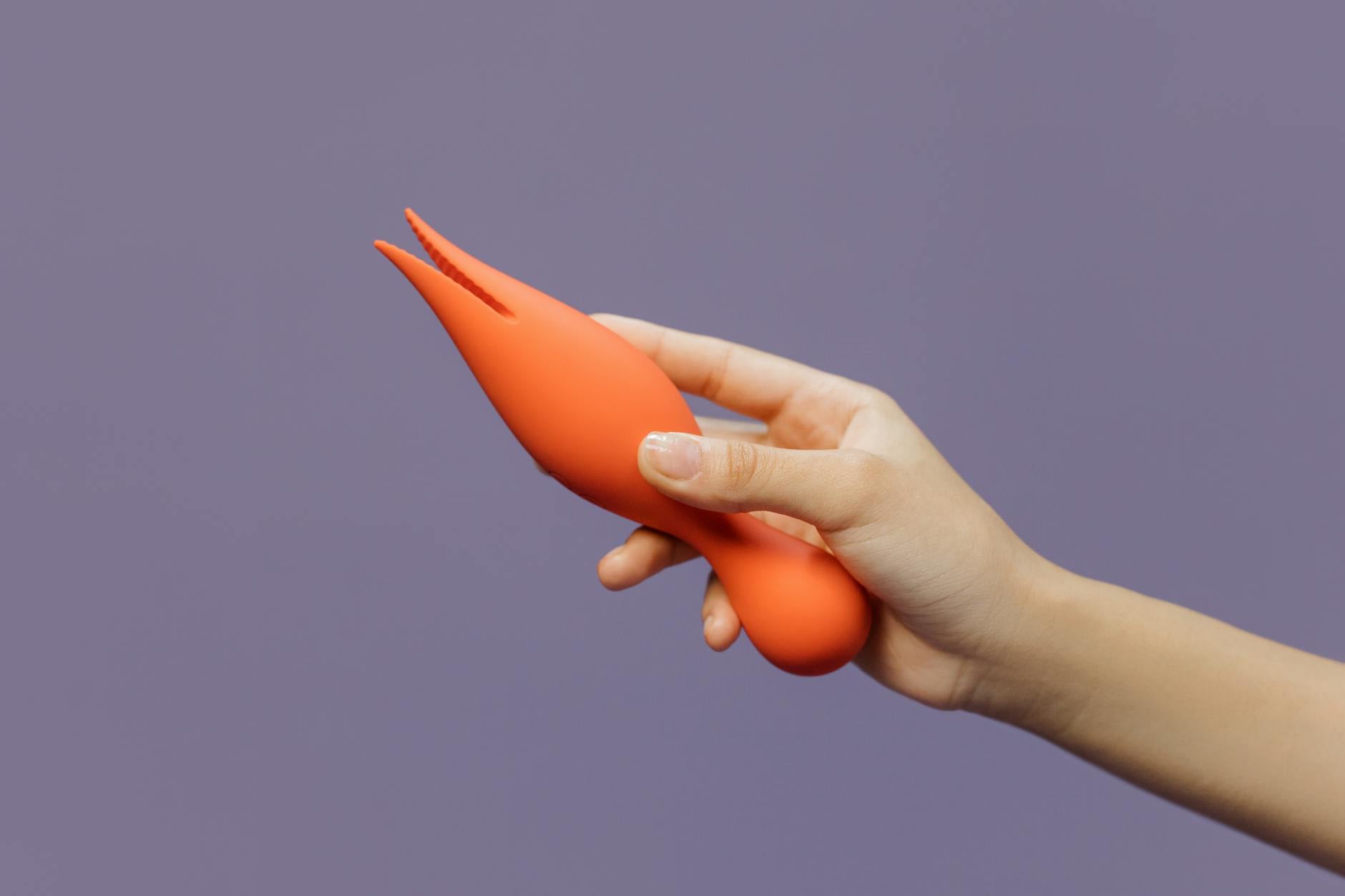
Photo by cottonbro studio on Pexels
The practical protocol for rebuilding intensity
Don't jump straight to maximum power. That defeats the purpose. Here's what actually works.
Start with awareness, not stimulation. Spend three sessions just holding a lemon vibrator against your clitoris without turning it on. Let your body remember what it feels like to be touched there without pressure to perform. This sounds slow, but it resets your nervous system.
Use the lowest setting first. Turn it on at pattern 1 or 2. Stay there for 5-10 minutes. Notice what you feel. Don't chase the orgasm. Just feel.
Extend your warm-up time. If you're used to five-minute foreplay, double it. Arousal takes longer when sensation has been muted. Your clitoris needs time to engorge. Rush this and you'll never reach full intensity.
Layer in novelty without abandoning the device. Once you're comfortable with the lemon vibrator on low, try different angles. Try moving it in small circles instead of holding it still. Use it through your underwear. Try it in the shower. Variation retrains your nervous system to stay interested.
Breathwork matters more than you think. Shallow breathing during arousal restricts pelvic blood flow. Breathe deeply and slowly. On the exhale, consciously relax your pelvic floor. This sounds mechanical, but it's the difference between a half-orgasm and a full one.
The mental piece that changes everything
Let's be honest. Weak orgasms are often psychologically loaded. You feel broken. You worry you're not attractive anymore. You start faking it to protect your partner's feelings. Every time you don't reach the intensity you remember, the anxiety builds, which makes the next orgasm even harder.
This is where most advice fails. People tell you to "just relax" or "be present," as if you haven't already tried that. The real work is separating what your body is telling you from what your brain is making it mean.
Your clitoris isn't broken. Your technique might be. Your arousal window might be shorter. Your pelvic floor might be tight. Your hormones might be in flux. But broken? No.
When you use a lemon clitoral vibrator, you're not just changing the stimulus. You're giving yourself permission to explore sensation differently. You're saying "this is an experiment, not a test." That mental shift alone reduces anxiety enough to let fuller orgasms through.
How long does this actually take
If you're dealing with desensitization, expect 4-6 weeks to notice real change. If it's hormonal or pelvic floor tension, you might need 8-12 weeks. If it's mostly mental, 2-3 weeks of consistent practice is often enough.
Consistent is key. Using a lemon vibrator once a month won't rebuild anything. Three times a week, in quiet, unrushed sessions, actually rewires your nervous system.
When to bring your partner in
If you're in a relationship, your partner's understanding of what's happening matters. Weak orgasms aren't rejection of them. They're not a sign the sex is bad. Tell them what you're noticing and what you're trying. A partner who gets curious instead of defensive makes this transition faster and easier.
You might also use a lemon clitoral vibrator together. Some people find that partnered exploration with a new device feels like discovering pleasure for the first time together. That novelty and shared attention can absolutely reignite intensity.
If your partner dismisses toys as unnecessary, that's a different conversation. <a href="/blog/how-to-use-lemon-vibrators-when-your-partner-dismisses-toys-as-unnecessary">Read this on navigating that dynamic</a>.
The consistency question
Yes, weak orgasms can come back to haunt you if you stop using devices and fall back into old patterns. No, that doesn't mean you're dependent on toys. It means your nervous system responds to novelty and variety. Once you've rebuilt sensation, switching between manual stimulation and a lemon vibrator keeps things fresh. You're training adaptability, not addiction.
When it's more than technique
If you've been practicing the protocol above for 8-10 weeks and orgasms are still weak, see a pelvic floor physical therapist. Tension or dysfunction often needs professional intervention. A PT can teach you how to properly relax your pelvic floor, which is a skill most of us never learn.
You might also get bloodwork done. Low testosterone, thyroid issues, and anemia all dampen orgasmic response. A doctor can check these in one afternoon.
Most of the time, though, the issue is technique, novelty, or mental load. And all three respond beautifully to lemon vibrators used with intention.
FAQ
Why does suction work better than vibration for weak orgasms?
Suction stimulates the clitoral bulb and surrounding tissue through pressure change rather than friction. This activates different nerve pathways than traditional vibration, which is why people with desensitization from conventional vibrators often respond powerfully to suction-based toys. It's literally a different sensation, which retrains your nervous system.
Can weak orgasms be a sign of a serious health problem?
Sometimes. Thyroid dysfunction, anemia, depression, and cardiovascular issues all affect orgasmic capacity. If weak orgasms appeared suddenly and came with other symptoms (fatigue, mood changes, pain), see a doctor. Most of the time, though, weak orgasms are behavioral or hormonal, not medical.
Should I use numbing products or desensitizing creams to make my clitoris more sensitive?
No. That's backward. Numbing products make things worse by reducing sensation further. Sensitivity comes from blood flow, nerve health, and mental engagement. Lemon vibrators and patience address all three.
How often should I use a lemon vibrator if I'm trying to rebuild orgasm intensity?
Three to five times per week is ideal during the rebuilding phase. Once you've regained intensity, using it 1-3 times per week keeps sensation sharp. More than that isn't necessary. Less than that and you'll drift back into old patterns.
Can weak orgasms come back after I rebuild them?
Yes, if you stop introducing novelty or if stress spikes. But rebuilding a second time is faster because you already know what works. Most people find that once they understand the mechanism (novelty, blood flow, mental clarity), weak orgasms become less likely because they're maintaining variety naturally.
Is it normal for orgasms to feel different at different times of my cycle?
Completely normal. Estrogen levels shift throughout your cycle, which changes tissue thickness, lubrication, and engorgement. Orgasms often feel strongest during ovulation and weakest during menstruation. This isn't dysfunction. It's biology. A lemon clitoral vibrator works across all phases because suction adapts to different tissue states better than vibration does.
The real fix
Weak orgasms aren't a sign you're aging out of pleasure or that your body's betraying you. They're almost always a sign you need novelty, better arousal, or reduced pelvic tension. Sometimes all three.
Lemon vibrators work because they introduce genuine variation while keeping your nervous system engaged. They're not a bandage. They're a retraining tool.
Start small, stay patient, and trust the process. The intensity you're missing isn't gone. It's waiting for the right combination of stimulus, time, and mental space to come back.
If you'd like personalized guidance on what might be happening in your specific situation, <a href="/contact">reach out to us</a>. We're here to help you rebuild what you're missing.