When trust breaks, pleasure gets caught in the rubble
Infidelity doesn't just wound the relationship. It wounds the body. You may notice you freeze when your partner touches you. Or that your own arousal feels dangerous, like it's betraying you somehow. Or that you can't tell the difference between reconnecting and just performing consent. That's not broken. That's a nervous system doing exactly what it's supposed to do when safety has been violated.
Using lemon vibrators during this kind of recovery isn't about jumping back into sex quickly. It's about reclaiming your body as yours first, before it's shared again.
Why your body is guarding itself right now
When infidelity happens, your nervous system categorizes your partner's touch as ambiguous. Not safe, not explicitly dangerous, but unpredictable. At the same time, you're trying to stay in the relationship, work through it, maybe go to therapy. That creates a conflict in your body. You want to reconnect. Your nervous system wants proof first.
This is why forced intimacy during recovery backfires. Sex that happens before your body has regained a sense of safety feels like you're overriding your own judgment. Which you are. And that teaches your body that your instincts don't matter.
Lemon vibrators solve this differently. They're solo. They're under your control. They have nothing to do with your partner's choices or your partner's presence. When you use them, your body gets to practice pleasure without the constant calculation of whether it's safe to feel good around another person.
Starting with solo exploration again
After betrayal, many people either avoid their own body entirely or rush into partner sex to prove everything's fine. Neither works. The reset needs to happen in private first.
Here's what I recommend to clients rebuilding:
Pick a time when you're actually alone. Not stolen time, not "maybe they'll stay asleep." Real solitude. Your nervous system needs to know there's zero risk of interruption or having to explain yourself.
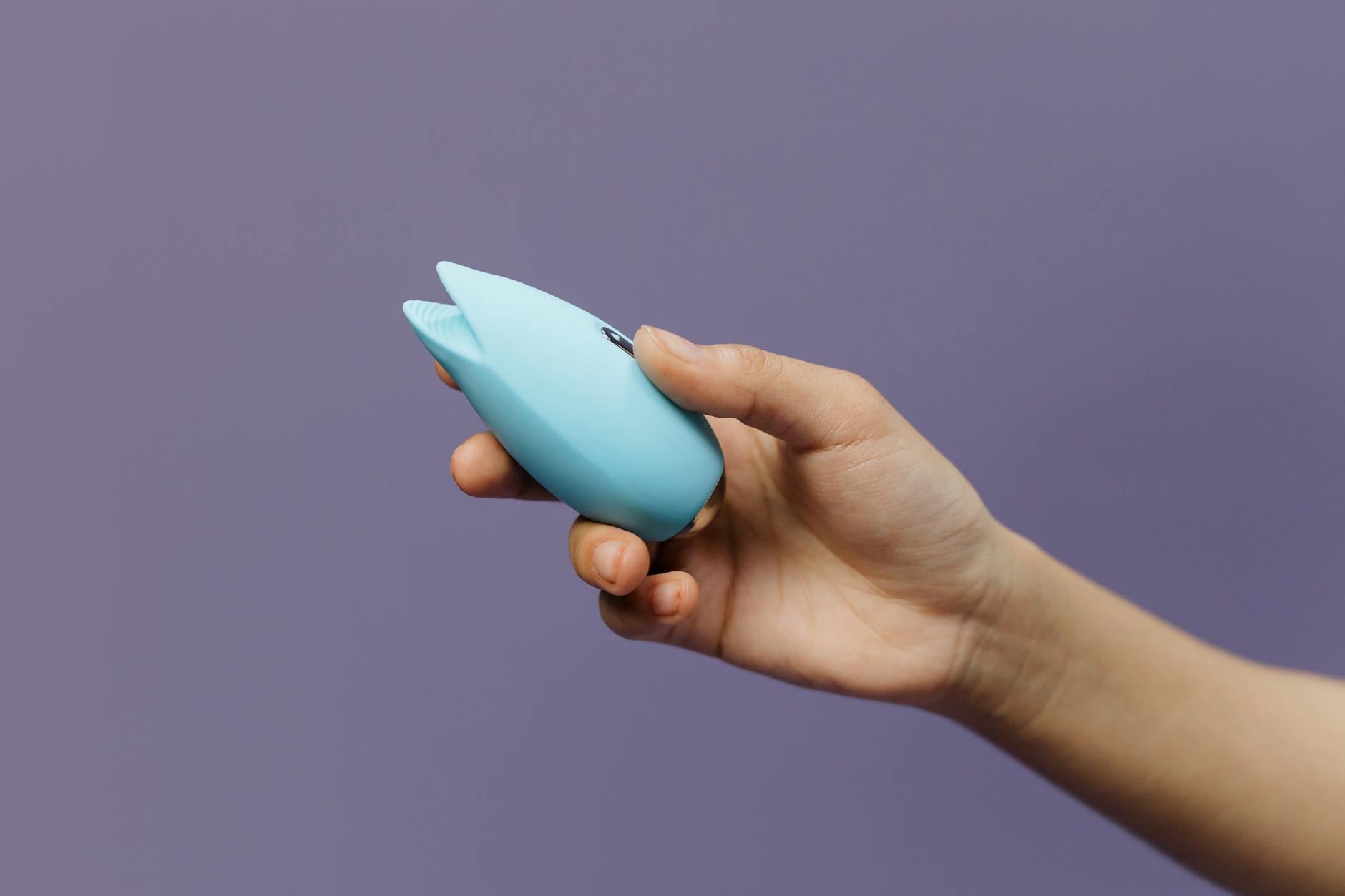
Start with the Lem vibrator on its lowest setting. Lemon's clitoral vibrators are designed for precision without overwhelming intensity. After betrayal, overwhelming anything feels like a violation. Low intensity lets you notice sensation without bracing against it.
Focus on the physical sensation, not on arousal or reaching an orgasm. This is key. During recovery, we often use sex as a way to prove we're fine or that the relationship is fine. But your body knows that's a lie. Instead, spend 10-15 minutes just noticing: what does this feel like? Does it feel good? What temperature is your skin? Is your breathing shallow or deep?
If numbness shows up, don't push. Some people report that their vulva feels completely numb for weeks or months after infidelity. That's dissociation protecting you. It will return. The Lem vibrator won't force it back faster, but regular, consistent solo touch in a safe context does help reset the nervous system eventually.
When your partner wants to reconnect sexually
This is where it gets complicated. Because eventually, you probably do want to have sex with your partner again. But your body doesn't believe it's safe yet. Using lemon vibrators in partnered contexts can bridge that gap, but only if you're doing it on your terms.
First, separate the conversations. "I want us to rebuild intimacy" is different from "I want to feel aroused right now." One is about the relationship. The other is about your body's readiness. Confuse them and you'll end up performing arousal you don't feel, which reinforces the original wound.
If you do want to involve a partner in your pleasure again, lemon vibrators give you control that penetration or manual touch doesn't. You can guide the intensity. You can stop. You can ask for it to be slower or faster without managing your partner's ego. That kind of directional control is actually how trust rebuilds physically.
One approach: you use the Lem vibrator on yourself while your partner is present but not touching. They watch. They see you're in control. Over time, as your nervous system gets evidence that your partner respects your boundaries, you might invite more participation. But the early sessions are about proof, not performance.
The vulva-guarding response (and why it's normal)
Some people describe their vulva as "defensive" after infidelity. The pelvic floor tightens involuntarily. Touch that used to feel good now triggers a protective clench. This is pelvic floor hypertonicity, and it's wildly common after trauma or betrayal.
Lemon vibrators can actually help retrain this response, but gently. The suction and vibration of devices like the Lem can help the pelvic floor learn to relax instead of brace. But this only works if you're doing it in a context where you actually feel safe.
Which means: if you're not at the point where you feel safe exploring, don't force it. This reset happens through therapy, conversations with your partner about what happened and why, and time. The vibrator is a tool for when your nervous system is ready, not before.
What your partner needs to understand
If your partner is in this recovery process with you, they need to know a few hard things. Using lemon vibrators during this phase isn't about preferring toys to them. It's about your body needing to find its own baseline first. It's like physical therapy. You don't skip PT because someone you love could stretch your leg for you. You do PT alone first to rebuild the foundation.
Your partner's job right now is to demonstrate that they respect your timeline. That means not pushing for sex. Not interpreting solo pleasure as rejection. Not turning the vibrator into something sexual or performative between you two until you're ready.
If your partner is struggling with this, that's worth addressing in therapy. Because if they can't tolerate you rebuilding your own sense of safety, that's information about whether this relationship can actually rebuild trust.
The timeline isn't linear
Some weeks you'll feel ready to reconnect. Other weeks, your body will slam the door shut. That's not regression. That's your nervous system doing careful work. Trust rebuilds in a spiral, not a line. You'll have sex that feels good, then sex that feels scary, then a week where you just want to use the Lem on your own and not be touched at all.
All of this is normal. All of it is data. The goal isn't to fast-forward through it. The goal is to get back to a place where your body trusts itself to feel good, and trusts your partner enough to share that with them.
Lemon vibrators aren't the answer to infidelity. Therapy is. Honesty is. Your partner's genuine commitment to changing whatever led them to cheat is. But a tool that lets your body practice pleasure safely, on your own terms, at your own pace? That's valuable infrastructure for the work ahead.
People also ask
Is it normal to not want sex after infidelity?
Completely. Your body is protecting you. Infidelity teaches your nervous system that vulnerability isn't safe. Not wanting sex is your system doing its job. This usually shifts over weeks to months as you rebuild trust, but there's no timeline. If you're not wanting sex after a year of active recovery work, that's worth exploring with a therapist, because it might point to deeper incompatibility or unfinished processing.
Can using a vibrator alone damage my relationship further?
No. What damages it is secrecy and the message that you don't trust your partner. Using lemon vibrators as part of your solo recovery, with your partner's knowledge and understanding, actually signals that you're doing the work to rebuild. It's transparent. It's self-directed. It's healthy. What damages relationships is using toys as a way to avoid the actual conversations about what happened and why.
How do I tell my partner I want to use lemon vibrators during recovery?
Direct and early. Don't wait until you're in bed. Have the conversation when you're both clothed and calm. Say something like: "I need to reconnect with my own body first before we can rebuild sexual intimacy. I'm going to use a vibrator as part of that. I'm telling you because I want transparency, not secrecy." Most partners who are actually committed to rebuilding will respect this. If they don't, that's a sign the recovery process needs to happen in therapy.
What if I can't feel pleasure at all right now?
That numbness is protective. Pushing through it doesn't work. Instead, focus on sensation without pleasure. Does the Lem vibrator feel warm or cool? Does the rhythm feel rhythmic or chaotic? Is your breathing changing? These are data points your nervous system is collecting. Pleasure will return when safety returns. That timeline varies wildly, but it usually moves in the right direction if you're doing the other work.
Should my partner be in the room while I use a vibrator?
Only if you want them to be. Solo use is about rebuilding your relationship with your own body. Partner-present use is about rebuilding your relationship with them. These are different steps. Start alone. Move to partner-present only when your nervous system signals you're ready. There's no right timeline.
What if the vibrator brings back memories of the infidelity?
Some people have sensory flashbacks triggered by unexpected things. If lemon vibrators trigger that response, pause. Try a different context. Try waiting longer. Try talking to your therapist about what specifically is being triggered. It's not the tool's fault. It's that your nervous system is still processing. That processing matters more than the pleasure right now.
The long view
Rebuilding after infidelity is not a detour. It's the actual work of the relationship. Pleasure is part of that, but it's not the foundation. Safety is. Trust is. Honesty about what happened and why is. When those things are being rebuilt, lemon vibrators become a way your body practices feeling good without the complication of another person's choices or unpredictability.
You deserve to feel safe in your own body again. You deserve pleasure that's just yours. And you deserve a relationship where your partner respects that timeline. If they do, there's a path forward. If they don't, that's information too.
The vibrator isn't the answer. But it can be part of the answer while you're doing the real work.