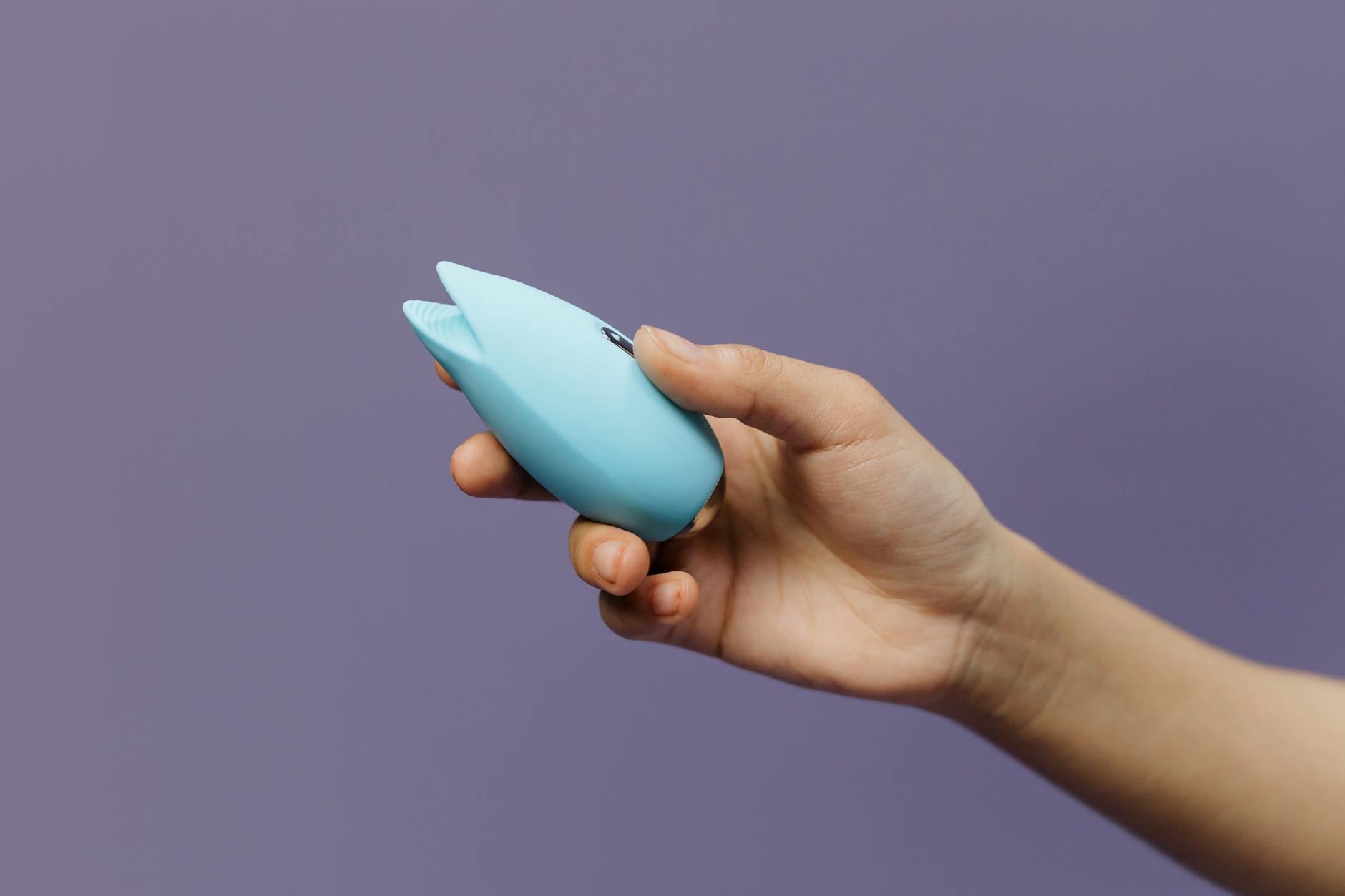
How to Use Lemon Vibrators When You're Starting Over After Divorce
Rebuilding pleasure is part of rebuilding yourself. Here's how lemon clitoral vibrators fit into that process, and why your body deserves this attention.
Let's be real. After divorce, your body might feel like a stranger to you. Maybe you avoided pleasure for months. Maybe you had sex that felt obligatory, then suddenly didn't. Maybe you're terrified of wanting anything at all.
Divorce isn't just an emotional rupture. It's a neurological one. Your nervous system has been through betrayal, loss, and the daily friction of a relationship that stopped working. Your brain is literally rewired to be suspicious of vulnerability. Your body remembers the last person who touched it, and it's confused about what touch means now.
Pleasure isn't frivolous in this phase. It's medicine. When you experience an orgasm, your nervous system releases oxytocin, dopamine, and serotonin. These aren't feel-good chemicals just for fun. They're the same chemicals that build trust, regulate fear, and remind your body that safety exists.
Using a lemon vibrator alone is different from partnered sex. You have complete control. There's no performance, no negotiation, no eye contact if you don't want it. That matters tremendously when you're starting from ground zero.
Most of my clients who've been through divorce report the same early block. They feel guilty touching themselves. Not because they were raised restrictively, but because their ex made them feel undesirable, or because they learned sex was transactional, or because they spent years contorting themselves into someone else's preference.
That guilt is worth addressing before you even unwrap a lemon clitoral vibrator.
Your pleasure is not a betrayal. It's not selfish. It's not a sign you didn't try hard enough in your marriage. It's a sign you're honoring the person who was willing to stay in something painful and is now choosing to step back into life.
Here's what I tell clients in therapy: using a lemon sexual toy alone is the first conversation you're having with yourself about what you actually want, not what was required of you. That conversation is the most important one.
If you've never used a clitoral vibrator, or it's been years, start with something gentle. The Lemon vibrator has multiple intensity settings, which is crucial when you're rebuilding sensitivity and don't know what your body needs yet.
Begin at setting 1 or 2. Not because there's something wrong with you, but because your nervous system is hypervigilant right now. Lower intensity feels less jarring. It also lets you actually feel what's happening instead of being flooded by sensation.
The suction design matters here too. Unlike traditional vibrators that rely on direct friction, a lemon vibrator creates a gentle pulse that stimulates without aggressive pressure. For someone restarting after a long emotional gap, that difference is significant. It feels less clinical, more like something is nurturing you rather than something you have to perform for.
Environment is not trivial. You're not just touching your body. You're telling your nervous system that it's safe to want something.
Here's what helps:
Choose a time when you have real privacy. Not "pretty sure everyone's asleep." Actual, locked-door privacy. Your nervous system needs to know there's zero chance of interruption. This is part of safety.
Dim the lights or light a candle. Not for performance. For permission. You're signaling to yourself that this time is special, intentional.
Put your phone on silent in another room. The ping of a notification will hijack your nervous system. That's not theory. That's neurobiology. You can't rebuild intimate connection with your own body while part of your attention is waiting for a text.
Use a water-based lubricant. Your body might take longer to produce natural lubrication than it did before. That's normal. It's not a sign of dysfunction. Lube is not a crutch. It's a signal that you're taking this seriously.
Give yourself 15 to 20 minutes. This isn't about efficiency. It's about proving to your nervous system that pleasure isn't rushed. You get time. You get space.
Begin with the lemon vibrator turned off. Just hold it. Feel the weight. Feel what it's like to be intentional about a tool that's entirely for you. For some people, this step alone brings up emotion. That's okay. You're renegotiating your relationship with your own body.
When you're ready, turn it to the lowest setting. The suction sensation is usually a surprise. It's not like the vibration most people expect. It's more like a gentle pull, a soft rhythm that builds rather than immediately floods.
If it feels too intense, pause. There's no medal for powering through. Your job right now is to learn what feels good to you, not to prove you can handle stimulation.
If it feels fine, spend time exploring. Move it slightly. Notice where the sensation is strongest. Notice if you want firmer pressure or softer. There's no right answer. You're collecting data about yourself.
Some people come easily the first time. Some don't come for weeks. Both are completely normal. After divorce, your relationship with orgasm itself might be complicated. You might have been faking. You might have been forced. You might have never had a clear sense of what your own pleasure actually feels like separate from someone else's needs.
Don't make orgasm the goal. Make sensation the goal. Make learning the goal. Make permission the goal.
When an orgasm does come, you might cry. You might feel nothing special. You might feel a release that surprises you. All of these are fine. You're not supposed to feel a certain way about your own pleasure. You're just supposed to feel something.
Regular use of a lemon vibrator isn't about addiction or desensitization. It's about creating a new neural pathway. Right now, your nervous system associates vulnerability with pain. Every time you use a vibrator and have a positive experience, you're adding evidence to the opposite story. Touch can be safe. Your body can want something. Wanting something doesn't mean you'll be hurt.
This takes time. Neuroscience suggests you need about 66 days of consistent behavior to rewire a pattern. That's just over two months. If you use a lemon sexual toy twice a week, you're looking at roughly four months to genuinely reshape how your nervous system responds to intimacy.
That's not a long time when you think about rebuilding yourself after divorce.
In the first few weeks, you might notice your body feels less numb. That's the oxytocin working. You might sleep better. That's the serotonin. You might feel a tiny bit more capable in other areas of life. That's the dopamine and the neural reshaping.
Around week four or five, many people report that the experience starts to feel less clinical and more genuinely pleasurable. Your shame quiets down. Your nervous system starts to believe that this is safe.
At week eight or beyond, the relationship itself shifts. You're not using a lemon vibrator to fix yourself. You're using it because it feels good. The medicinal quality is still there, but now it's underneath enjoyment, not instead of it.
If you have significant sexual trauma in your history, using any vibrator should be paired with therapy. A trauma-informed therapist can help you navigate the sensations that come up. This isn't a barrier to using a lemon clitoral vibrator. It's a way of honoring the work.
If you notice you're using masturbation to avoid processing difficult emotions about the divorce itself, that's worth flagging too. Pleasure can become a dissociation tool just like alcohol or scrolling. The goal isn't avoidance. It's integration.
If your body consistently doesn't respond to any vibrator, even after several weeks, there might be a hormonal, neurological, or structural factor worth exploring with a gynecologist. That's not failure. That's information.
Using a lemon vibrator after divorce isn't about rushing back to sexuality. It's about reclaiming your body as yours. It's about learning that you can want something for yourself, experience something for yourself, and that this makes you stronger, not weaker.
Your body was there through the whole marriage and the whole breakup. It deserves to be treated like it matters. And it does.
Completely normal. Your nervous system is in protection mode. Numbness is a legitimate defense mechanism after betrayal. Keep the first few sessions low-pressure and sensation-focused rather than orgasm-focused. You're building a new relationship with your body. That takes repeated positive experiences before your nervous system believes it's safe to feel.
There's no magic number, but twice a week is a good baseline. It's frequent enough to create neural changes without being so frequent that it becomes compulsive. Listen to your body. If you want more, use it more. If you need a break, take one. The goal is pleasure, not obligation.
Yes, in an indirect way. When you know what your body feels like in a state of pleasure and safety, you're better equipped to recognize red flags in a new partner's touch. You also have less desperation, which actually makes for healthier dating. You're not seeking validation through sex. You're looking for partnership with someone who respects your autonomy.
That's a trauma response, not a permanent barrier. A lemon vibrator from Hello Nancy is yours. It's entirely separate from that history. Many of my clients find it helpful to get a brand new toy specifically to create a clean break. The design, the packaging, the newness of it. It's symbolically different. That symbol matters.
Not at all. Self-pleasure and partnered pleasure use completely different neural pathways. One doesn't preclude the other. Actually, people who have a healthy relationship with their own pleasure tend to have healthier partnered sex when they're ready. You know what you like. You know how to communicate. You're not expecting one person to meet all your needs.
It's avoidance if it's replacing processing your emotions about the divorce. It's healing if it's happening alongside therapy, journaling, or talking with trusted friends. You can tell the difference by checking in with yourself. Are you using it to feel better in your body? Or to not feel the harder emotions? Both are human. But only one rebuilds you.
If you're navigating this kind of transition, remember that rediscovering pleasure isn't selfish. It's how you tell yourself, and your nervous system, that you're worth the effort to rebuild. That's the whole thing. Start there.