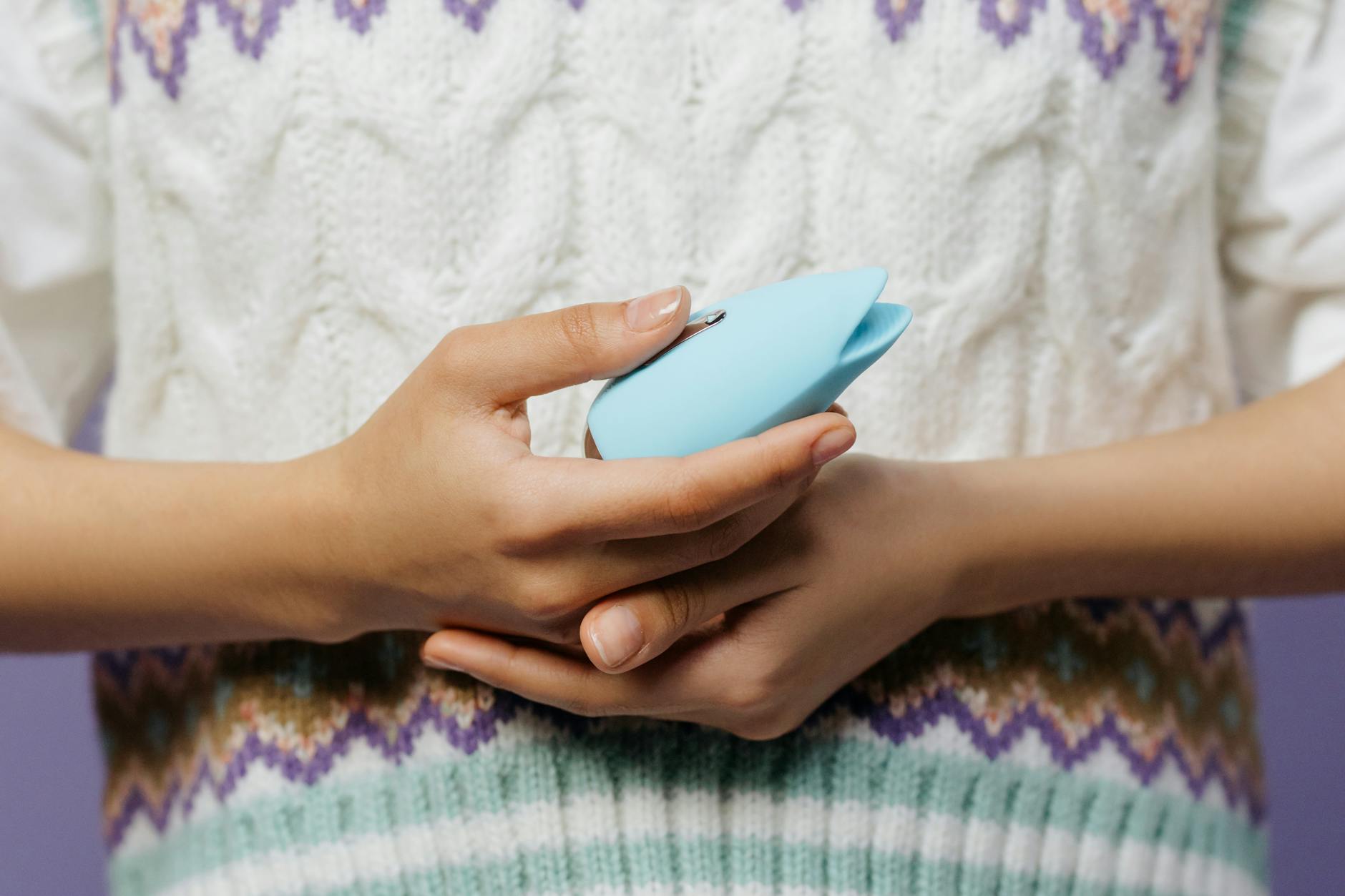
How to Use Lemon Vibrators When You Have Difficulty Reaching Orgasm With a Partner
The gap between solo and partnered pleasure is real. Here's how lemon clitoral vibrators bridge it, plus why your brain might be the actual friction point.
You can orgasm solo. Easily, reliably, sometimes multiple times. But the moment your partner is involved, it vanishes. Your body goes quiet. Your brain won't settle. And suddenly you're performing a version of yourself instead of actually experiencing pleasure. If that's you, you're not broken. You're not "too sensitive" or "too picky." You're actually having a very normal human experience that nobody talks about.
Here's the neurology: orgasm requires two competing systems to be active at once. The sympathetic nervous system (arousal, excitement, urgency) has to build. And simultaneously, the parasympathetic nervous system (rest, safety, letting go) has to dominate at the moment of release. When a partner is present, your brain often can't juggle both. You get stuck in performance mode, vigilance, or self-consciousness. The parasympathetic system slams the brakes.
When you're solo, there are zero external variables. No one watching your face. No rhythm to match. No pressure to finish on schedule. No unconscious worry that you're taking "too long." Your nervous system can fully relax into the experience. Orgasm is just physics at that point.
With a partner, even if they're the most supportive person alive, your ancient brain registers something different. You're sharing physical space with another person's agenda, rhythm, and (real or imagined) judgments. That's not romantic. That's a threat detection system flipping on.
For people with vulvas especially, clitoral stimulation requires a very specific kind of attention. The clitoris has 8,000 nerve endings concentrated in a small area. It needs consistency, the right pressure, and the right pattern. Most partnered sex doesn't naturally provide that. Even well-meaning penetration or hand stimulation often misses the mark because the angle is wrong or the intensity fluctuates.
Adding a lemon vibrator changes the equation entirely.
A lemon clitoral vibrator does three crucial things that standard partnered stimulation often doesn't.
First: consistency. The suction pattern on a device like the Lem stays exactly the same for as long as you need. Your partner's hand gets tired. Their rhythm drifts. The pressure weakens. A vibrator maintains the specific stimulation your nervous system has started to build on. That consistency is what lets your body actually reach the threshold.
Second: external control. When you hold the vibrator, you control the intensity, angle, and timing. You're not waiting for your partner to sense that you need more pressure or a different pattern. You're not anxious that they'll move wrong. You're not managing their experience. You're just receiving. That shift in agency often unlocks the parasympathetic response orgasm requires.
Third: removes the performance layer. When both of you agree that a lemon vibrator is part of the session, the dynamic shifts. It's no longer "am I taking too long" or "are they getting bored." It's "we're using this tool because it works for my body." That reframe is genuinely powerful. Your nervous system settles because the pressure evaporates.
Timing matters. Don't spring it on them mid-sex. Have a separate conversation, maybe over a drink or a walk, when you're not naked and vulnerable. Something like: "I've noticed I have an easier time orgasming on my own, and I think it's because of how my body responds to specific stimulation. I'd love to try using a vibrator together so we can both experience that. What do you think?"
The framing is key. This isn't "you're not enough." This is "my body works better with this tool, and I want to share that with you."
If they push back, listen to what's underneath. Sometimes partners worry they'll be "replaced" or feel inadequate. Be honest: you can't orgasm from a vibrator alone either. A tool isn't a partner. It's a tool. You're choosing to build this experience together.
Start with foreplay that gets you genuinely turned on first. At least 15 minutes. Your nervous system needs time to downshift. Once you're aroused, introduce the vibrator at low intensity. This isn't the grand finale yet. This is exploring.
Your partner can be involved in lots of ways that don't make it transactional. They can kiss your neck. Touch other parts of your body. Be present with you. The vibrator is handling one job. They can handle others.
Experiment with what pressure feels right. Some people want direct contact on the clitoris. Others prefer indirect stimulation through the clitoral hood. Some want the vibrator held still. Others want it moved in circles or up and down. This is information your partner learns too. You're not performing. You're communicating what your body actually needs.
Here's the thing that often surprises people: once the physical piece works, the mental piece follows. You're no longer stressed about whether you'll orgasm. You're not watching yourself. You're just there, in your body, with your partner beside you. That's when real pleasure happens.
Sometimes even with a vibrator, orgasm still doesn't happen. That's information, not failure. It might mean your nervous system still doesn't feel fully safe. Or you're still in your head, judging the experience instead of living it. Ask yourself: am I worried my partner is bored? Am I aware of how much time has passed? Am I thinking about my body instead of feeling it?
If you answer yes to any of those, the vibrator isn't the problem. The nervous system is. In that case, you might benefit from deeper work around shame, performance anxiety, or trauma. That's not something a toy fixes. That's therapy work.
Sometimes the problem is more practical. Maybe the vibrator's pattern doesn't match what your body learned during solo play. Try different devices. The Lemon has a suction-based pattern that feels different from vibration. That might be exactly what you need, or it might not match your body. How to Use Lemon Clitoral Vibrators If You're Over 40 and Never Owned One covers finding what pattern works for you in more detail.
Other times your partner wants to be the one holding the vibrator. That can work beautifully if you communicate clearly about pressure and speed. But it also reintroduces that control dynamic. You have to trust them to follow what you're asking for. Some couples find this is easier after a few solo sessions where you show them exactly what works.
Once you solve the immediate problem of using a lemon vibrator with a partner, something deeper often shifts. You've communicated directly about your body's needs. You've moved past shame around needing a tool. You've built in explicit conversation about pleasure instead of assuming you should "just know" each other.
That communication tends to spill into other parts of intimacy. You start talking about what feels good. What doesn't. What you want to try. That's the real win. The vibrator is just the catalyst.
Your orgasm isn't a gift you owe your partner. It's your nervous system's response when it feels safe enough to let go. A tool that helps create that safety is worth every bit of integration it takes.
The goal isn't to become someone who always needs a vibrator to orgasm with a partner. The goal is to give yourself permission to use every tool your body responds to, and to have a partner who wants that for you.
Your brain is designed to detect threat. A partner introduces variables: their body, their rhythm, their presence, potential judgment. Your nervous system may interpret that as a demand instead of an invitation. Partnered orgasm requires both arousal and deep relaxation happening simultaneously, which is harder when part of your brain is still in performance mode.
No. Actually the opposite happens. When you build a reliable path to orgasm with a partner using a vibrator, your nervous system learns: "This is safe. This works. My body can let go here." That sense of safety often transfers. You might find partnered sex easier even without the tool afterward.
Yes, but with one caveat: the pressure and timing become their responsibility, not yours. That can feel loving or can reintroduce performance anxiety, depending on your dynamic. Many couples find it's easier if you hold it first, learn what works, then let your partner try. But if you do let them hold it, give specific feedback: "A bit faster here" or "Hold it still, don't move it."
Nope. Plenty of couples use them regularly. Some use them every time. Some occasionally. There's no right way. The only "weird" thing is staying in a pattern that doesn't work and pretending you're fine with it.
This is worth a direct conversation. You might say: "My body responds differently to direct clitoral stimulation than penetration can provide. Using a vibrator isn't about you or what I feel for you. It's about giving my body what it actually needs. I want you here with me while we do this." Be specific about how they can participate so it doesn't feel like a solo activity.
As long as you need. There's no timer. If you're reaching orgasm in 5 minutes with a vibrator versus 45 minutes of traditional partnered sex, that's actually a win for both of you. You're not "too quick." You're efficient. Your body found what works and responded.
That's information that something else is at play. It might be medication, hormones, past trauma, or simply that your nervous system isn't ready to let go in that context. A vibrator is a tool, not a guarantee. If this is frustrating, talking to a therapist trained in sex therapy or relationships can help you figure out whether it's a communication issue, a safety issue, or something medical.