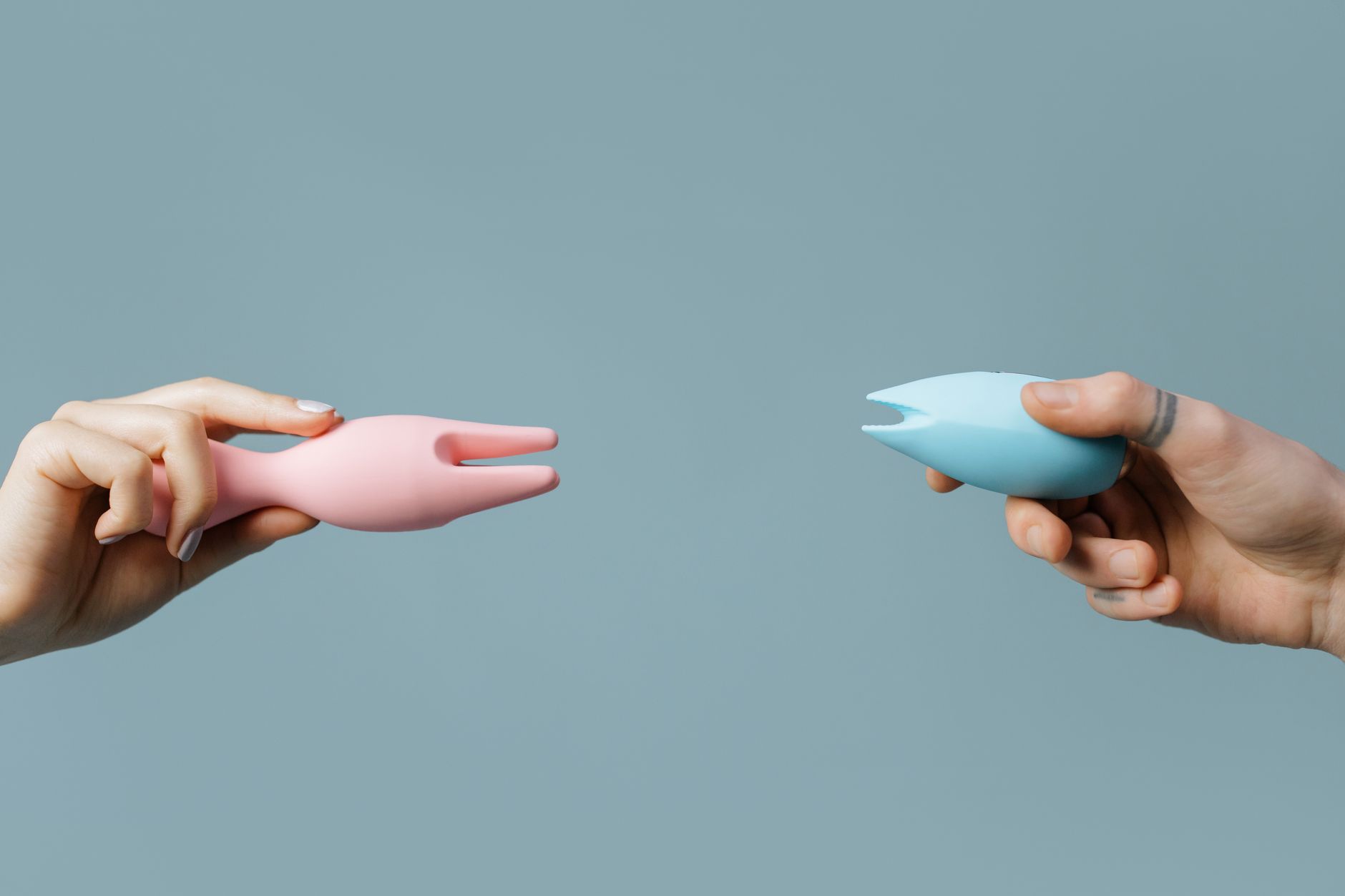
If you're discovering clitoral vibrators for the first time at 50, 60, or 70, there's zero catching up to do. Pleasure isn't a race with a finish line you can miss. What's actually happening is you're finally giving yourself permission. That matters more than the decade it took to get there.
A lot of my clients in this position tell me the same thing: they spent decades prioritizing everyone else's needs, managing other people's comfort, or navigating a relationship where their own pleasure felt like a low-priority item. Then something shifts. A divorce. A long-term partner passes. Kids move out. The role you've been playing for forty years suddenly has an understudy, and you realize you're free to write your own script.
Here's what's real: your body has shifted. If you've gone through menopause or are approaching it, tissue changes are happening. Estrogen is lower, which affects lubrication and sometimes tissue thickness. Arousal might build more slowly than it did at 25. Your sensitivity to touch may feel different. Some of my clients describe it as needing a longer runway to takeoff.
What hasn't changed: your capacity for pleasure. Your brain. Your nerve endings. Your ability to have powerful, satisfying orgasms. The clitoris has 8,000 nerve endings, and none of them expire on your 50th birthday.
In fact, many people who explore pleasure for the first time later in life report that it feels more intense, more localized, and sometimes more emotionally resonant than they expected. You're not working through decades of performance anxiety. You're not trying to coordinate someone else's timeline. You're just... exploring what feels good.
Clitoral vibrators, particularly suction-style ones like the Lemon lineup, are designed to do something straightforward: apply gentle, rhythmic stimulation to the most sensitive cluster of nerve endings on your body. That's it. No penetration required. No complex positioning. No performance demands.
For someone returning to pleasure after a long time away, or exploring it for the first time, this simplicity is the whole point. You're not managing someone else's needs. You're not worrying about whether you're "doing it right." You're just feeling what happens when you focus attention on your own body.
Lemon vibrators come in different intensities and patterns. Start low. The idea isn't to overwhelm your nervous system on day one. It's to gently wake up pathways that may have been quiet for a while.
Part one: Time. Give yourself at least 20 minutes, and ideally 30. This isn't about rushing to an outcome. This is about letting your body respond at its own pace. If arousal builds slowly for you right now, that's normal. Budget for the warm-up, not just the stimulation.
Part two: Space. Lock the door if you need to. Put your phone somewhere you won't hear it. Light a candle if that helps. Some of my clients find that a small ritual makes the permission feel more real. You're not sneaking around. You're not rushing through this because someone else needs the bathroom in ten minutes. This is your time, and the space should reflect that.
Part three: Permission. This is the one that actually matters. A lot of people who are exploring pleasure for the first time at 50+ have internalized a message that their sexuality is either embarrassing or irrelevant. It isn't. Your pleasure is legitimate. Wanting to feel good in your body is legitimate. Taking time to explore that alone, with a partner, or however you want to, is legitimate.
Start with your hands. Spend a few minutes exploring your own body without any toy. Not because you need to warm up (though you might), but because you need to know what you already know. What does your body feel like when you touch it with intention? Where does touch feel good? Where does it feel strange or numb or overly sensitive?
Then introduce the Lemon vibrator on the lowest setting. Start on the outer areas first. The Lem's suction design means you're working with gentle pressure rather than direct vibration, so many people find it feels less jarring than they expected.
Notice what happens. Does it feel good? Does it feel weird? Does it feel like nothing right now? All of those are fine. Pleasure isn't always an instant lightning bolt. Sometimes it's a slow accumulation of sensation that suddenly clicks into something more intense.
If it feels good, stay with it. If it feels uncomfortable, stop. You can always try again later. You have time.
A lot of people exploring pleasure for the first time at this age are doing it solo. That's completely normal and totally valid. But it can also bring up stuff. Grief that sexuality wasn't prioritized earlier. Sadness about time spent in a partnership where your pleasure didn't matter. Loneliness about exploring this alone.
All of that is real and worth acknowledging. Pleasure doesn't erase those feelings. It can actually exist alongside them.
If you have a partner and you're not sharing this yet, that's a separate conversation. You don't owe anyone the details of your solo exploration. But if you eventually want to invite them into this, that's a conversation worth having when you're ready. How to introduce Lemon vibrators to a new partner without awkwardness is a whole different piece of work.
If you're genuinely solo and want to stay that way, there's no missing piece. You're not exploring pleasure as foreplay to partnered sex. You're exploring it as an end in itself. That matters.
You might not orgasm the first time. Or the third time. That doesn't mean something's wrong. It means your nervous system is waking up, and that takes time. Every body is different, and every body's timeline is different.
You might feel weird about it initially. That's okay. Weird doesn't mean wrong. Give yourself a few weeks of exploration before you decide whether this is actually for you.
You might discover that you prefer one intensity or pattern over another. That's not a failure of imagination on your part. That's just you learning what your body actually responds to, not what you think it should respond to.
You might realize that arousal takes longer to build with age, and that's not a problem to solve. It's just a variable to plan around. Budget more time. Use more lubricant. Start earlier in the day when you might have more energy.
Here's what I've seen happen repeatedly with clients who start this journey: they discover that they have agency over their own pleasure. That sounds obvious when you say it out loud, but it's genuinely revelatory for people who've spent fifty years living in someone else's script.
You realize your body still works. It just needs different things now, or maybe it always needed these things and no one asked you what you wanted. Either way, you're learning the answer.
You might find it easier to ask for what you want in other parts of your life, too. If you can say "I want this sensation, at this intensity, for this long," then you can also say "I want to leave this job" or "I want to spend time with friends" or "I want this conversation to be about my needs right now."
Pleasure, once you start paying attention to it, bleeds into everything.
Use a water-based lubricant. Even if you don't think you need it, the extra glide helps. It's not about something being broken. It's about reducing friction and making the experience more comfortable.
Clean your Lemon vibrator before and after use. Warm water and a tiny bit of soap work fine. Pat it dry.
If you're using it with a partner later, communicate before, during, and after. "That felt good" is just as valuable information as "that hurt."
If sensation feels completely numb and doesn't change after a few sessions, that's worth mentioning to a doctor. Sometimes hormonal changes or other things can affect sensation in ways that need professional attention. That's not failure. That's just information.
Is it normal to feel weird or embarrassed about exploring pleasure at this age?
Completely normal. You've probably internalized a message that your sexuality belongs to someone else or that it's irrelevant now. Neither is true. Feeling weird doesn't mean you should stop. It usually means you're crossing a boundary you've been respecting for a long time. That takes courage.
What if I don't orgasm?
Orgasm is not the goal. Sensation is. Learning what your body feels like when you're paying attention to it is. If orgasm happens, great. If it doesn't, that doesn't mean you did something wrong. Keep exploring.
Can I use a Lemon vibrator if I'm in a relationship?
Yes. Your solo pleasure is separate from partnered pleasure. You don't need permission from anyone. That said, if you eventually want to share this with a partner, communication matters.
What if my partner finds out and gets upset?
That's a conversation, not a problem with you. Your body is yours. Your pleasure is yours. A partner's insecurity about that is their work to do. You might decide to include them, or you might decide this is just for you. Either way, your right to explore your own body doesn't depend on their comfort.
How often should I use a Lemon vibrator?
As often as you want. There's no schedule. Some people explore daily for a while, then settle into weekly or monthly. Listen to what your body wants.
What if I use it and nothing happens?
Then nothing happens. Not every exploration leads somewhere. Sometimes you're just learning what doesn't work for you. That's valuable information too.
You're not catching up. You're not behind. You're not doing anything wrong. You're just finally asking yourself what you want and giving yourself permission to find out.
That's not a small thing. For a lot of my clients, it's the first time in decades they've prioritized their own sensation without guilt, without performance pressure, without someone else's timeline running in the background.
Take your time. Be kind to yourself. Your pleasure matters, and it matters exactly as much at 50 or 60 or 70 as it did at 25. You're just finally believing it.
If you have questions about how to navigate this or want to talk through what pleasure might look like in your specific situation, reach out. That's what I'm here for.