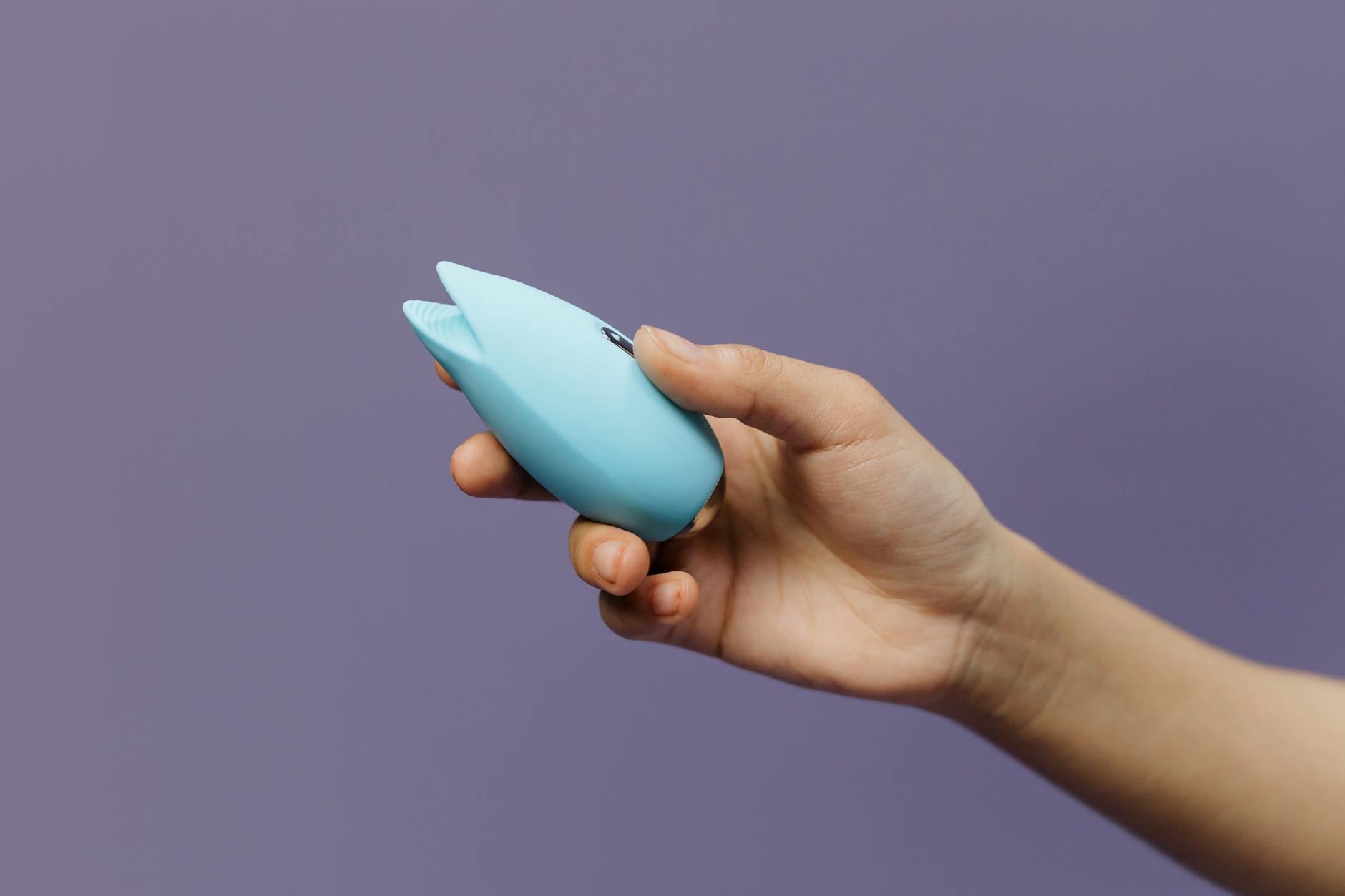
How to Use Lemon Vibrators When Your Arousal Builds Slowly Over Time
Your body isn't broken if it takes 20 or 30 minutes to reach peak arousal. Here's exactly how to structure solo and partnered sex around your actual rhythm using a lemon clitoral vibrator.
You're not slow. Your arousal isn't broken. And you're definitely not alone. Between 40 and 60 percent of women report that arousal takes 15 minutes or longer to build to the point where penetration (if you want it) feels good. For some people, that number is closer to 30 or 40 minutes. That's not a problem. That's your baseline.
Here's the thing though: almost every cultural script we've inherited tells us arousal should be snappy. Netflix sex scenes show a kiss and then immediate action. Partner pressure (spoken or unspoken) often implies that a long warm-up is inconvenient. And if you're someone who was conditioned to prioritize speed for a partner's sake, you've probably spent years trying to force your body to hurry.
Slow arousal isn't a deficit. It's a neurological reality. Your brain needs time to downshift from the day, your blood vessels need time to engorge the clitoris and labia, and your vagina needs time to lubricate and expand. Some bodies do this in 5 minutes. Some do it in 45. Both are normal.
When you try to skip the warm-up, you end up with pain, numbness, or the sensation that something is physically wrong. None of that is your body failing. It's your body saying: not yet.
Lemon clitoral vibrators work particularly well for slow-building arousal because they let you start subtly. The suction mechanism of a lemon vibrator doesn't require intense friction or deep penetration. You can begin on a low pattern, spend 15 minutes gently building, and gradually increase intensity as your arousal actually peaks. No rushing. No forcing.
If you've been operating on a 10 or 15 minute timeframe for solo sex, this is your permission to reset.
Budget 30 to 45 minutes for a solo session, minimum. This isn't about being lazy or indulgent. It's about matching your reality. That time breaks down like this:
Minutes 1-10: Settle in. Get off your phone. Maybe some light touch, maybe just being present in your body. If you're using a lemon vibrator, start on pattern 1 or 2. Suction mode (if your device has it) works beautifully here because it's gentler than traditional vibration and doesn't overstimulate early arousal.
Minutes 10-25: Increase gradually. Move to pattern 3 or 4. Pay attention to what feels building rather than what feels good right now. This distinction matters. Arousal that builds is arousal that has somewhere to go.
Minutes 25-40: Follow the sensations. If you want to stay here, stay. If you're moving toward orgasm, lean into that. If you want to shift patterns or intensity, shift. You're not racing to a finish line. You're following your own arc.
If you're partnered, slow arousal becomes a relationship conversation, not just a physical one. And that conversation is much harder if you frame it as a problem you need to solve.
Instead, try: "My body builds arousal over 20 to 30 minutes. That's not changing, and I'm not interested in trying to change it. What I want is for us to build a sex life that works with that, not against it."
Then get specific. Maybe that means:
Starting with a lemon clitoral vibrator while your partner touches you elsewhere. You get your warm-up time. They stay engaged. No one is bored or resentful.
Extending foreplay significantly. Not as a favor to your body. As the actual structure of sex for you both.
Using a lemon vibrator first solo, then inviting your partner to join once you're already aroused. This takes pressure off them to "do it right" and lets them join you in pleasure rather than trying to create it from scratch.
Scheduling sex when you have time and mental space. Rushed, stressed arousal is even slower than baseline arousal. Planned sex gets a bad rap, but for people with slow-building arousal, knowing you have 45 minutes and no interruptions is deeply helpful.
Most lemon sexual toys have between 5 and 10 distinct patterns. Rather than jumping around, I recommend finding two or three that work and staying with them.
Pattern 1 or 2 (gentle, often a slow pulse) is your opener. Stay there for 10 minutes minimum. Your brain needs to recognize what's happening and downshift. Jarring yourself with high intensity too early actually resets your arousal clock.
Pattern 4 or 5 (often a building pulse or steady medium vibration) is your sweet spot for the 15 to 30 minute mark. This is where most of your time lives. This is not boring. This is where arousal actually accumulates.
Pattern 8 or 9 (high intensity, often a rapid pulse) is your finishing pattern, if you want one. You only use this once you're genuinely peaked.
Honestly though, many people with slow-building arousal never use the highest patterns. They find that staying with pattern 5 for 30 minutes is more reliable than jumping to pattern 9 for 2 minutes. Both paths lead to orgasm. One just matches your nervous system better.
Slow arousal often comes with slower natural lubrication. This is not a sign that you're not turned on. It's just how some bodies work.
Use lubricant from the start. Water-based is best for lemon clitoral vibrators. You don't need a ton. A small amount makes the difference between feeling texture and sensation, versus feeling pressure and discomfort.
Reapply every 10 minutes or so, especially if you're going long. Lube drying out is one of the main reasons people think their arousal is flagging when actually they just need more lubrication.
If you've noticed that your arousal is slow across most contexts (solo, partnered, different partners, different situations), it often correlates with a nervous system that needs time to feel safe.
This isn't trauma necessarily. It's just wiring. Some people's parasympathetic nervous systems need 20 minutes to downregulate from the day. Some need 5. Neither is better.
What helps:
Consistency. The same space, the same time of day, the same lemon vibrator (your body learns it). Your nervous system likes patterns.
Minimal distractions. Phone off, door locked, no half-listening for someone else. True presence.
No performance expectation. The moment you're thinking about whether you're taking too long, you've just extended the time. You're allowed to want what you want without justifying it.
Completely normal. Research on sexual response shows that arousal timelines vary widely across individuals and even across contexts for the same person. Anywhere from 5 to 45 minutes is well within the normal range. If you're adding lemon clitoral vibrators to your routine, you're actually matching your body's natural pace rather than fighting it.
Yes, but not by making arousal faster. A good lemon clitoral vibrator helps by letting you start gently and layer stimulation without pressure. The suction mechanism is less jarring than traditional vibration, which means you can spend 30 minutes gradually building without overstimulation or numbness setting in. It's not a shortcut. It's a tool that works with your body's actual timeline.
Not significantly. Your baseline arousal timeline is neurological, not learned. However, using lemon sexual toys regularly does sometimes help you get better at recognizing and trusting early stages of arousal. You become more skilled at feeling subtle shifts rather than waiting for intensity. That's a different skill than speeding up the process itself.
Solo first, honestly. You want to understand your own arousal curve without partner pressure. Once you know what patterns and durations work for your body, introducing a partner is easier because you're not trying to figure out two nervous systems at once. When you do bring a partner in, they can join once you're already 15 or 20 minutes into the process, which removes a lot of pressure on them to "turn you on."
No. Slow arousal is not about attraction or desire. It's about your nervous system's pace. You can be wildly attracted to your partner and still need 25 minutes to peak. Confusing these two things is what tanks a lot of otherwise good relationships. Slow arousal is a timeline issue, not a connection issue.
Then addressing the stress matters alongside using a lemon vibrator. Acute stress (a work deadline, a fight you're still processing) genuinely does slow arousal further. If you notice that your arousal is slow right now but used to be faster, look at what's different in your life. A lemon clitoral vibrator can help, but it won't override genuine anxiety or crisis. Those need separate attention.
Slow arousal is often actually deeper arousal. You're not skipping any stages. You're living through all of them, which means the full experience of your own pleasure has more texture and nuance. People who rush through arousal often miss the building sensations entirely.
Lemon clitoral vibrators pair beautifully with slow arousal because they're designed for extended, graduated sensation. You're not fighting your body's pace. You're honoring it.
If you want to talk more about building a pleasure practice that actually works for your timeline, reach out. This is exactly the kind of thing I work through with people.